Sunday, November 30, 2008

I'd Do Anything For Love


This weekend, I heard the infamous Meatloaf song "I Would Do Anything for Love," and it got me thinking: What does that refer to in the song? He'd do anything for love, but he won't do what?

Does anyone know the real reason?

I did some research, and here is what I found thus far:

"Each verse mentions two things that he would do for love, followed by one thing that he will not do. The title phrase repetition reasserts that he 'won't do that' previously stated one thing. Each mention of 'that' is an anaphoric reference to the particular promise that he made earlier in the same verse.

"But I'll never forget the way you feel right now ..."
"But I'll never forgive myself if we don't go all the way tonight ..."
"But I'll never do it better than I do it with you ..."
"But I'll never stop dreaming of you every night of my life ..."

In addition, the female vocalist predicts two other things that he will do: "You'll see that it's time to move on" and 'You'll be screwing around.' To both of these, he emphatically responds, 'I won't do that!'

Some people misunderstand the lyrics, claiming that the singer never identifies what 'that' thing is, which he will not do. Steinman predicted this confusion during production. An early episode of the VH1 program Pop-up Video made this claim at the end of the song's video: 'Exactly what Meat Loaf won't do for love remains a mystery to this day.' A reviewer writing for Allmusic commented that 'The lyrics build suspense by portraying a romance-consumed lover who pledges to do anything in the name of love except 'that,' a mysterious thing that he will not specify.' The reviewer concludes that the mystery is revealed during the closing stages of the song, incorrectly implying that all references of 'that' refer to the female vocalist's predictions at the end. Others assume that 'that' is an exophoric reference to a sex act." (Wikipedia)

Further, Meatloaf comments on the amiguous meaning: "Jimmy always said, "You know what? Nobody's gonna get it." And he was right."

And, when asked in a 1998 interview with VH1 what "that" refers to, Meatloaf replies, "It's sort of is a little puzzle and I guess it goes by - but they're all great things. 'I won't stop doing beautiful things and I won't do bad things.' It's very noble. I'm very proud of that song because it's very much like out of the world of Excalibur. To me, it's like Sir Lancelot or something - very noble and chivalrous. That's my favorite song on the record - it's very ambitious."

So, what does "that" really mean or refer to? Does anyone know?

Thursday, November 27, 2008

Master of Disguises

A new poem surfaced in the recent issue of The New Yorker that I would like to post and look into. It's called "Master of Disguises" by Charles Simic.

Master of Disguises

Surely he walks among us unrecognized:
Some barber, some clerk, delivery man,
Pharmacist, hairdresser, bodybuilder,
Exotic dancer, gem cutter, dog walker,
The blind beggar singing, Oh Lord, remember me,

Some window decorator starting a fake fire
In a fake fireplace while mother and father watch
From the couch with their frozen smiles
As the street empties and the time comes
For the undertaker and the last waiter to head home.

O homeless old man, standing in a doorway
With your face half hidden,
I wouldn't even rule out the black cat crossing the street,
The bare light bulb swinging on a wire
In a subway tunnel as the train comes to a stop.

I was wondering if I could get some alternate interpretations of the poem. To me, the most obvious reference to "he" who walks among us is the Lord himself. Kind of like Joan Osborne's 1996 song "What If God Was One of Us." Is he this guy or that guy on the street? We'll never know, but it could be possible. Anything is possible.

I wonder why the whole poem is almost all descriptions of different people that He could be. He could have just left it as the first stanza and then continued with a new idea to branch off. Is the poet trying to just show how many possibilities it could be that he's a different person, man or woman, elite or blue collar, man or animal, light or thing?

Or, does the poet mean that we can find the Lord in any person, animal, or thing (whether that thing is reall Him or not). Like, we can be enlightened or receive the wisdom or faith we need in anyone or anything around us. Or is it just plain and simple that He could be anything anywhere?

I think my favorite part is the second stanza where the poet paints the picture of the dull, fake American family who is "frozen" as they watch a "fake fire." We all know these families. They appear solid and strong on the outside, but it's all a show. Why is the family juxtaposed into this poem? Is the undertaker brought up to reinforce death coming, that we are mortal?

Using a fire to sit in front of is even a Hellish, deathly image, as if the family is fake and has no faith, so they will go to darker places. I don't know. I'm trying to speculate.

To me, the poem has a lot of overwhelmingly dark places with a bit of light. The fire in the store. The train in a tunnel (coming to a stop). The black cat with its white eyes. The bare light bulb in the tunnel. The half hidden face of the homeless man. But they all are mentioned in the second and third stanzas--not the first. Does this represent faith or hope? How life is like on Earth? What is the purpose of these dark/light images?

So, what do you think of the poem "Master of Disguises?"

Wednesday, November 26, 2008

Twilight Release


For those Twilight series fans out there, you probably have already seen the movie. A lot of my students have not only seen the movie on opening night, but they've seen it multiple times. I'm sure this is another reason that the movie is gathering so much money in its first week open.

Thus far, Twilight grossed $7 million from shows at midnight on Thursday when it opened. It is expected to reach between $30 and $60 million by the end of the week.

This movie breaks records, not necessarily for the high amounts of money coming in, but for that money coming in for a female director. Pretty impressive.

From Yahoo! News: "When the counting's done, Twilight's Friday take may rank as the 14th or 15th biggest opener of all time, having surpassed the debuts of Indiana Jones and the Kingdom of the Crystal Skull ($25 million) and Quantum of Solace ($27 million), to name two recent blockbusters."

But who can be surprised with these numbers? Girls, older women, and even guys have plunged into this series and are obsessed with it almost to the extent of the Harry Potter series. Those fantasy series for a YA audience really sell. Interesting idea for those struggling writers out there who need a breakthrough...

Does anyone know if they're planning on making movies for each of the books in the series?

Anyway, I expect to see the film soon, so a movie review will follow in the next week or so. This is a good week for it to debut as kids are off of school and families need something to do when they come to visit. Going to the movie theatre is the best option because you can do something together but not really interact or engage with one another. Good ideas.

Watch the interview with the author here. If you're interested in the Twilight series, check it out.

So, what do you think of the release of Twilight ?

Tuesday, November 25, 2008

A Wolf at the Table


A Wolf at the Table, Augusten Burrough's new memoir on his father, is absolutely worth reading. I just put it down, and I have to say: I couldn't stop reading it.

I liked this book better than some of his others (Running with Scissors and Sellevision), but his shorter stories are entirely amusing to me. This book recalls Augusten's memories of his father, mostly from his childhood, recalling his drunken, angry, violent father and how this impacted his life and image of himself as a man in his shadow.

His memories are sharp and are explained with utter detail as if we've somehow warped back to 1970 and are in the room with the family. You can sense the uncomfortable nature, the awkward tension, the drama, the anger, the resentment. It was quite a horrid place to grow up in, if you ask me.

I think one of Burroughs' strengths as a writer would have to his ability to construct characters. He can create the most vivid, articulate characters that you either love or hate, resent or secretly enjoy. The way he creates the image of his father makes the reader feel how he felt as a child in the presence of an unstable man. I feel sympathy for the sitation, but I know that we grow and learn from our situations as Burroughs had with his childhood and parental situation.

Even though I enjoyed the book, looking at it from a deeper analytical perspective, a lot of it seemed kind of sporadic and disconnected. Certain parts seemed random and it jumped all over the place at times. Some pages were choppy and just contained a random paragraph or two that seemed to be written at completely different times but were just sort of inserted in there because it's good writing. I liked the frequent breaks, but sometimes I felt that they didn't flow or keep me reading at a steady pace. He still can pull it off though.

I also wonder what happened with his mother. We receive closure at the end of A Wolf at the Table when his father dies, but what happens to his mother? There isn't much information on her available.

Writing this book must have been theraputic for Burroughs. It seems that there was a lot of unresolved inner issues with his father, and perhaps writing this book, getting out every bitter memory or him, and somehow putting it all together and making sense of it might help close that door and heal those wounds to forgive him and put everything past him. Perhaps this is also a tribute to him (even though it does turn him into the antagonist that we all despise) because now his memory lives on forever. Even if his students forget him, people will remember his father through his memoir and perhaps can learn to understand why he was the way he was. This book was out of love and understanding even though it was a hard, troubling time for him.

I do have to admit that I was sickened by the pet deaths in the book. I know those were necessary for the plot, but they were absolutely horrifying and gruesome. It helped show his insensitivity to small creatures (or just any living thing for that matter), but his writing was so powerful that I found myself cringing and moaning when I got those points. It was absolutely disgusting. If you are an absolute animal lover, I do encourage to read the book, but there are certain points that you might want to avoid.

I guess we all do fear that we might end up like our parents. I think it's that growing fear (as we get older and recognize some of their faults) that makes us afraid when we do see ourselves engaging in the same behaviors or turning out to resemble them, even in the slightest way. You hope that you carry on their good characteristics, but sometimes you just can't help turning out like them in some ways. When you're raised in a certain environment, it's hard not to take on factors from that environment, or from the role models that surround you. I entirely do believe that our childhoods deeply shape who we become, and I think this is evident in this book.

Burroughs struggled in this book because he was taking on negative qualities from his father. Since he didn't find many attractive qualities in his father, seeing any of them come out in him was a tragedy. Especially since he carried on the alcoholism, that must have really stung him. That's not the easiest trait to carry over into yourself.

Anyway, this is a great book and a must-read. Anything by the author will do. He is an intelligent man with a great sense of humor and his ability to entertain is unlike any that I have seen before. His talents should be recognized.

So, what did you think of A Wolf at the Table?

Monday, November 24, 2008

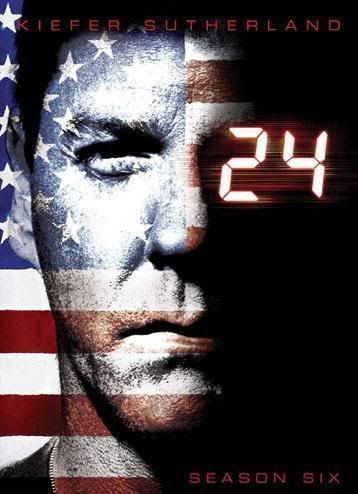
24: Redemption


Being a 24 fan, I was excited to see the long-awaited premeire of their next TV appearance. Last night, 24 came back to the air for the first time in over a year with a two-hour movie-like special airing of 24: Redemption.

For those who watched Redemption, what did you think of its comeback?

This TV movie is meant to bridge the gap between seasons 6 and 7. With the writer's stike and Kiefer's dangerous behaviors, the movie and the upcoming season are long overdue. Viewers must have been anxious to see anything with 24 since we missed out last year.

What I want to know is this: Was this movie a part of the original season 7, but they edited it out to use as a tease for the upcoming season? Was it filmed seperately?

I do have some small issues with this new season as a long-time fan of the show. Number one: Why does Tony Allameda come back from the dead? Now, that's getting soap opera on us. Come on. Create some new characters. Don't go that low.

Also, what happened to President Palmer to have the other guy in there as the current president? I remember him being the nasty VP last season. How come he is the man in charge now? Am I forgetting something from the last season?

I am always interested to see where the conflict takes place and with whom. This season is with Africa which is an interesting target. I think it's a good idea, but I'm in a confused state as to why America would want this guerilla warfare connection. I'm sure I'll find out later on in the season.

I also can't believe they're selling this thing so fast. It's not THAT great to buy and to want to have your own copy. Weird.

And I don't care how old Sutherland gets. He still is on and in charge. Jack Bauer is an incredible character and he still has that amazing quality that makes him so badass.

So, what did you think of 24's Redemption?

Sunday, November 23, 2008

Sex and the City, The Movie


Alright, I finally saw the movie. Being a Sex and the City fan from its HBO television days, I was nervous to actually commit myself to watching the movie. But, I felt I almost had to as a fan since I am so familiar with the storyline. I wanted to see what direction they took the characters I was so familiar with, and let me tell you, I have some mixed feelings on it.

First of all, I wonder why they did the movie. I thought that they ended the series very well. Every character was in a great spot in their lives; everything was happy. I felt awkward to go watch the movie because this meant, like all movies, that a new conflict would mount and would need to be resolved in each character. I didn't know if I wanted to see them go through yet another conflict after all the ones in the TV show. But maybe that's life. There are no happy endings. Conflicts always arise no matter how old we are.

Parts of me wonder if they did the movie because they all had no other projects to work on. It was their one great big project of their lives, and why not prolong it? It's been 4-5 years since it's been over, so let's get back in the spotlight.

The writer and creator of the show has been sort of sinking lately. She created a dud television program, Lipstick Jungle, which looked pitiful and awful. Too similar to Sex and the City, but on cable television? It just didn't look appealing whatsoever. It just recently got cancelled. Then she's putting out YA books on Carrie Bradshaw's teenage years in her journal? Come on. We need to branch off and away from Sex and the City. It's like if JK Rowling went off and published books from Harry's childhood before the first book. Enough already. If you can create one good thing, try another. Too much on the subject is going to kill it. It was great as it was as a TV show. They cut it off right at the right time, but now they're coming back with awkward spin offs. It has to stop if it wants to hold its luster and importance to television.

On the actual film itself: The biggest upsetting part to me was Samantha's breakup with Smith. Why did they have to do this? They were my favorite couple. He stayed with her through chemo, he had this hot body, personality, and career--why did she have to break it off? Were they trying to show women that they can't just live a life in a man's shadow? Was it an attempt to tell women to live for themselves, wherever they need to be, to be happy?


And Samantha doesn't look upset or heartbroken over the leave? No matter what kind of woman she is, I still think it would bother and upset her. She was with him for a long time. Cutting that off isn't just as easy as ripping off a cheap bandaid. And, why would Samantha want to pursue her promiscuous lifestyle after Smith? She's celebrating her fiftieth birthday. She can't live it for that much longer. She had a young, hot boyfriend. Stick with that. She could have at least spoken with him to try to work it out. She didn't even go that far. It's just frustrating and obnoxious. Yuck. I don't think Samantha's a dog person either.

They had a lot of footage that wasn't really necessary to the actual movie itself. A lot had no real importance and fluff scenes. Example: Ladies sitting on the bed and voting YES or NO to outfits Carrie was trying on. It just dragged on.

And since when was Miranda such a disheartening bitch? I don't remember her being THAT cold and heartless? And I thought Miranda was Carrie's best friend. If it is her best friend, why wouldn't she be Carrie's maid of honor? It's all so confusing to me.

How can Charlotte now all of a sudden become pregnant? Is this some form of magic? It's just too much of a happy ending. Honestly, her infertility was a part of her character. I bet some women really sided with her character because they also faced that same issue. This must be upsetting for some of those women who felt a connection to her character. Now they're just losers because they can't "accidentally" conceive.

How could Big construct such a big closet in that apartment? It was this tiny little closet, and all of a sudden it becomes this enormous room. Spacially, it doesn't make sense. In NYC, you can't expand too much. You have limited spaces. Very strange part.

I'm surprised Carrie took Big back so fast too. The first time she sees him, she runs into his arms, when, during the whole movie, she tries her hardest to put him behind her. The love letters and Miranda's confession turned all of that fury she was holding in her heart to forgive him? Maybe it's easier to forgive, but I thought we were constructing that strong single female (Carrie Bradshaw). He hurt her public image in her career--that alone is troubling and hard to forgive. I just thought the ending with them was too easy. It was nice that they got back together, but it was too fairy tale and too easy. Have him work for it after what he did to her!

Alright, that's all I am going to vent on. Maybe if you like a TV show, you shouldn't watch the film that comes after it, if there should be such a thing. I just feel discontented with that movie. Something isn't sitting right in me with that show now. I don't like converting from one side to the other. I will just try to put that two hours and thirty minutes out of my mind. It didn't happen, it didn't happen...

So, what did you think of the movie Sex and the City?

Saturday, November 22, 2008

Overparenting


How often do you see overparenting in your life?

I was extremely interested when I saw an article on overparenting in The New Yorker called "The Child Trap" by Joan Acocella. The point of the article, besides going over the issue, is also to promote certain books, but I still found some of the major points entirely interesting.

Overparenting has other names and terms you might be familiar with: spoiling, helicopter parenting, hovering parents, hothouse parenting, or death-grip parenting. The terms have been changing based on factors involved in the overparenting. Two new elements have been added to overparenting, since the past when it was just called spoiling: Anxiety (Will the child be affected by the imprint of the parent's overcontrol?) and Solicitude (The pressure with achievement and succeeding in every aspect of life).

Hara Estroff Marano's book In a Nation of Wimps: The High Cost of Invasive Parenting credits NCLB, No Child Left Behind, for adding to overparenting. Many preschools have now begun to substitute more reading and math skills time when normally children would have been allowed playtime. The pressures to succeed and pass NCLB tests not only put stress and pressure on students but on the parents. Marano says that "there is now a four-billion-dollar tutoring industry in the United States, serving most elementary school children."

I can't believe that mandated tests could have this much of an imprint on our students. Increased tutoring rates are astounding as well. But, when students are tutored one on one, they have a 90% chance of retaining the information taught. That number is astounding. One on one work should be used more often so students can retain the information that they should learn.

Adolescents who return home directly from college have a new coined term, boomerang children. "A recent survey found that 55% of American men between the ages of 18 and 24, and 14% of between the ages of 25 and 34, live with their parents. Among the reasons cited are the high cost of housing, heavy competition for good jobs, and the repaying of college loans, but another factor may be sheer habit, even desire."

Marano states potential causes for overparenting:

-The working mother (who, if staying home during a child's youth and quits her job, may lose up to a million dollars over the course of her career).

-The insecurity bred of the global economy (America cannot be left behind to other countries). Noted factors: Sputnik, NCLB.

-Brain plasticity research published in the 1990s ("while the infant brain is, in part, the product of genes, that endowment is just like clay; after birth it is 'sculpted' by the child's experience, the amount of stimulation he receives, above all in the first three years of life").

Carl Honore, who published another book on overparenting, talks about the impact of the self-esteem movement of the 1970s as contributing to overparenting. "According to the research he's read, such ego-pumping [such as praising and hanging up each piece of work the child does on the fridge] confers no benefit. A review of thousands of studies found that high self-esteem in children did not boost grades or career prospects, or even resistance to adult alcoholism."

Gary Cross notes that "the one reason that young men are refusing to grow up is that the women's movement has elimnated rewards for doing so." He credits the feminism movement for such effects. I don't agree with this. I know that feminism has changed how the world has been running, but I don't think it's THAT discouraging to males. I heard recently that more females are going to college now than males. I'm not surprised but I wouldn't cause it to be that disheartening.

But, is overparenting really a problem in today's world? Certain research also argues against the point:

-"Recent surveys have found that today's teenagers are volunteering for community service at a rate unequalled since the 1940s."

-"America's youth on average are now bigger, richer, better educated, and healthier than any other time in history."

-We've seen these arguments before in the past. In the 1950s, it was called "Momism" and it was thought to turn boys into homosexuals.

-There are other bigger problems to worry about than overparenting: "The percentage of poor children in America is greater today than it was thirty years ago. One in six children lives below the poverty line."

Research suggests so many things that you have to pick and choose what you think is right. Is it a major concern for this country? I don't think it's helping make individuals independent and ready to be citizens of this country, but maybe it's been that way for years. It's just more troubling now since we are now competing on a more global scale and other countries might not have overparenting issues as strong as we do now.

I've seen really bad cases in my own life that makes me angry about the issue. I get mad at mothers; how can they cause such dependency in older children? Don't they see what they're doing to their children? Or do they care too much? It's hard for me to comment since I'm not a mother and I won't really know how it is until I have my own children.

One case I want to highlight briefly really has made me angry about overparenting. This boy is now in college and does not know how to cook a single meal. His mother delivers food to his dorm weekly for him to eat (he could also go to the dining hall in emergencies) and she also picks up and drops off his laundry for him every week. When his mother doesn't cook him meals or fetch him food and drink, his girlfriend fills in. He is provided finances like gas expenditures, clothing, and gadgets (such as new iPods when the others become outdated). He doesn't clean his space either. He lets it get dirty until someone else does something about it. Perhaps this is also only-child syndrome going on here as well.

How long can this go on? I don't think he even realizes that he's being this odd and different from his peers. And what does he do with all this time off from doing other tasks that every other person does? No wonder he is gaining weight at rapid amounts. The whole situation is just disgusting.

Anyway, what do you think of overparenting, no matter what the argument is?

Friday, November 21, 2008

The Coffin Store

Another poem struck me in The New Yorker. Expect to see a lot of them in here. I enjoy reading poems that they publish in there. Some are too out there or hard for me to understand on a few reads, but others seem to speak to me.

But isn't that what poetry is? Words that speak to certain individuals? Words placed together to construct some sort of meaning, meaning that we can figure out and argue based on word choice and placement?

Anyway, I really enjoyed this poem by C.K. Williams called "The Coffin Store." Even though there are threads of death and fear of its coming, which is easy to grasp just by reading the title alone, there's a lot more there deeper beneath the surface.

"The Coffin Store"

I was lugging my death from Kampala to Krakow.
Death, what a ridiculous load you can be,
like the world atremble on Atlas's shoulders.

In Kampala I wondered why the people, so poor,
didn't just kill me. Why don't they kill me?
In Krakow I must have fancied I'd find poets to talk to.

I still believed then I'd domesticated my death,
that he'd no longer gnaw off my fingers and ears.
We even had parties together. "Happy," said death,

and gave me my present, a coffin, my coffin,
made in Kampala, with a sliding door in its lid,
to look through, at the sky, at the birds, at Kampala.

That was his way, I soon understood, of reverting
to talon and snarl, for the door refused to come open:
no sky, no bird, no poets, no Krakow.

Catherine came to me then, came to me then,
"Open your eyes, mon amour," but death
had undone me, my knuckles were raw as an ape's,

my mind slid like a sad-ankled skate, and no matter
what Catherine was saying, was sighing, was singing,
"Mon amour, mon amour," the door shut, oh shut.

I heard trees being felled, skinned, smoothed,
hammered together as coffins. I heard death
snorting and stamping, impatient to be hauled off away.

But here again was Catherine, sighing, and singing,
and the tiny carved wooden door slid ajar, just enough--
the sky, one single bird, Catherine--just enough.

Death is mentioned much more at the beginning of the poem than at the end. And more often than not, it appears as the last word in a line which almost gives it its emphasis and finality. The finisher. Death goes from first being the subject of the sentence, even capitalized, and later it becomes a part within the sentence which is like eventually accepting its coming slowly.

Death is even a persona and speaks. Death's only word is "happy," which is an ironic piece of dialogue for it to speak. Death is anything but happy for most people. But, the way it is said is almost like the speaker wants it, like, "happy now?" Was the speaker anticipating it too much? Thinking of it too much became almost wishing it to come closer? Is Death in her thoughts, as if they have a relationship and they "party?" How is party meant here? Like destructive or a fun time?

She "domesticated" death, converting it into something more acceptable for her liking. Death won't "gnaw off her fingers;" it will party with her instead. It is "happy" and gives her a present of the coffin instead of delivering it to her or forcing it upon her. The present image is much more warming and accepting than other harsher word choices.

I was wondering about the locations since I'm not familiar. Kampala is the capital of Ugunda in Africa. Krakow is a city in Poland. So, from Kampala to Krakow, the speaker is traveling north, almost like an ascendance into heaven. From this world to another. To Americans, they are unknown places that are foreign and far away. Kampala is when she questions her death (will it come?) as she would on Earth, and in the higher place, Krakow, she wishes to enrich her mind, expand herself, and speak with poets (the growing of the soul in a different place, the other world maybe). Or, is Krakow perhaps what she loves about life, what makes her want to live while Kampala is a place that reminds her of her own mortality? (I'm making the speaker a she in this case).

The coffin is made in Kampala, the darker place, where death becomes real.

How interesting that she can see the sky, the birds from the glass lid on the coffin. The sky is the polar opposite of where the coffin belongs, and birds are the opposite of her state in the coffin. Not only are they alive, but they are free and can fly. They are of the sky, free to roam, while she is now forced into the ground to remain, not to move. The birds and the sky are colorful images of life that she will still have a view of, but will be farther from, trapped away from.

These images appear in the last stanza, even in the last lines. Except now we have one bird and the same sky. All of this is "just enough." Just enough for what? Just enough to make death acceptable and okay? Just enough to make it tolerable? Just enough to be content and ease her from the thought of death?

These two images are sandwiched between "just enough" with dashes along with Catherine, bringing emphasis into it. Or were they just enough to be happy and satisfied with the life lived by the speaker? It's a great ending, but I'm not solid on it yet.

Catherine I am taking to be a lover, or just to symbolize love itself. Love is Earth-ridden and makes you feel like death will never come. It makes life worth living. It makes you recognize the sky and the birds; it makes you want to sigh and sing, and everything your lover says sounds like song and even sighing (the worse side of love). But love makes life so worth living. When we have at least had one good love, we can die satisfied.

What is important about the italicized lines?
What is going on with Catherine?
How does the speaker feel at the end of the poem?
What is the speaker's relationship with death?

This is my first thought process on the poem. I'm still working some things out. I like to write out my thoughts. It helps me solidify what is up there floating around and making it more concrete.

So, what do you think of "The Coffin Store?" Feel free to add interpretations or ideas.

Thursday, November 20, 2008

Naked


I've been ripping through audio books lately since I drive such a long ways to and fro work. I've been listening a lot to David Sedaris because I really enjoy his humor and his true-to-life stories.

Between Sedaris and Augusten Burroughs, they both have inspired me to record many of my own true, odd stories from my past, and I've been doing so in my spare time. It's really incredible with the amount of material you can dig up and relive, and still attempt to make it funny and quirky. I acknowledge both of these fine men to pushing my writing in this direction.

Anyway, today I finished Sedaris' Naked, but when I went to Wikipedia to check out the various chapters, I realized that the audio book only includes certain true stories. So, I've read most of Naked, and I thoroughly enjoyed it. He is very entertaining, and his writing is very easy to understand. He uses very humorous images and is very honest about himself, which is a relief. So many people hide who they are, but not Sedaris. He puts it all out there--his OCD, his homosexuality, his strange family and habits--and I admire that.

I read the following stories and enjoyed them very much:

"A Plague of Tics:" Sedaris' OCD and Tourettes-like behaviors as a child.

"Get Your Ya-Ya's Out!:" On Sedaris' grandmother (who lived in Cortland, C-State shout-out) who gets an illness and needs to live with the family. His parents eventually split.

"Next of Kin:" Literary pornography Sedaris read in a trashy novel and it circulated throughout his house.

"Cyclops:" Cautionary tales to Sedaris by his much-too-careful father which almost causes phobias and fears in Sedaris.

"True Detective": Sedaris' love of detective shows, and he reenacts mysteries in his household pretending he's involved in a show.

"Dix Hill:" Sedaris' job at a mental hospital with a crazy lady named Dix Hill.

"I Like Guys:" Sedaris recalls becoming aware of his homosexuality and recalls his first sexual experience with a crush in summer camp.

"The Drama Bugs:" Sedaris gets the acting bug, falling headfirst into Shakespeare and plays in high school.

"Ashes": Sedaris' sister's marriage and the death of his mother.

"Naked:" On Sedaris' trip to a nude colony.

Overall, I really enjoyed the stories. I would recommend this book to someone who enjoys something a little out of the ordinary, something a little strange and bizarre. If you liked Running with Scissors, this book is for you, but it's broken up in chunks of stories. Burroughs also has two books like this: Magical Thinking and Possible Side Effects which are much like this one and are quite enjoyable.

So, what do you think of David Sedaris or Naked?

Wednesday, November 19, 2008

Psychopathy

I have always been very interested in physchology and various disorders and diseases that people possess. The human mind is entirely fascinating, as is behavior and studying why we behave the way we do.

Recently, I read an article in The New Yorker called "Suffering Souls" by John Seabrook that discusses Dr. Kent Kiehl's research on psychopathy. The article was fascinating because it gives readers an eye into the research on psychopathy, which I had never really looked into before.

Here are some facts and ideas from the article in psychopathy:

-Psychopathy effects between 15 to 25% of the North American prison population.

-Psychologists believe that psychopathy exists in 1% of the North American male population. (This comes to about 1 million males)

-Female psychopaths are believed to be much rarer cases than males.

-"Pscyhopaths don't exhibit the manias, hysterias, and neuroses that are present in other types of mental illness. The main defect, which psychologists call 'severe emotional detachment'--a total lack of empathy and remorse--is concealed, and harder to describe than the symptoms of schizophrenia or bipolar disorder."

-Psychopathy is not identified as a disoder in The Diagnostic and Statical Manual of Mental Disorders, the American Psychiatric Assosiaction's canon. It is known as APD, antisocial personality disorder.

-There is no evidence as to what causes psychopathy, but research leads to genetic factors.

-Enviornmentally, psychopaths are more likely to come from neglectful families than loving, caring ones.

-Psychopathy is extremely difficult to treat. Dr. Kiehl believes that if you taregeted the part of the brain where psychopathic tendencies and behavior stems from and could find a drug to treat that region, then there could be a treatment. That kind of drug could earn a man a Nobel Prize.

-To identify a psychopath, Dr. Kiehl uses the Psychopathy Checklist or PCL-R, a twenty-item diagnostic instrument. "The interviewer scores the subject on each of the twenty items--parasitic lifestyle, pathological lying, conning, proneness to boredom, shallow emotions, lack of empathy, poor impulse control, promiscuity, irresponsibility, record of juvenile delinquency, and criminal versatility, among other tendencies--with zero, one or two depending on how pronounced the trait is." Some who scores a thirty five or higher is considered to be a psychopath.

-Early names for psychopathy:
-1801: French surgeon Phillipe Pinel coins the term "mania without delirium.
-Early 19th century: American surgeon Benjamin Rush coins the term "moral derangement."
-Mid-nineteenth century: "Moral insanity" becomes popular and is widely used in the US and England for violent criminals.
-1880s: "Pyschopath," literally meaning "suffering soul," was coined in Germany.
-1920s: "Constitutional psychopathic inferiority" becomes the catchall phrase psychiatrists use.

I would like to believe that this kind of behavior is genetic, not enviornmentally caused. I bet that it is, but it just so hard to prove. Anyway, I thought the information was interesting, to say the least.

A very interesting point and idea to muse on: Dr Kiehl says, "Think about it. Crime is a trillion-dollar-a-year problem. The average psychopath will be convicted of four violent crimes by the age of forty. And yet hardly anyone is funding research into the science. Schizophrenia, which causes much less crime, has a hundred times more research money devoted to it [...] Schizophrenics are seen as victims, and psychopaths are seen as predators. The former we feel empathy for, the latter we lock up."

So, what do you think about any of the above points or psychopathy in general?

Tuesday, November 18, 2008

NBA Shooting Sleeve


Now that basketball season is in full swing, I have been noticing a large increase in the number of shooting sleeves being worn. Being a new fan of professional basketball, I had no idea what these sleeves were for until only moments ago.

I think it's interesting to see how styles change in sports. Especially in basketball, styles are prevalent and drastically switch. If you watch older games of basketball, you can tell the time period by their style of dress. Shorter shorts were popular in the 70s and 80s while the 90s brought about longer shorts and sweatbands. Now, in the 00s, shooting sleeves are the newest thing, cointed by Allen Iverson.

Apparently, and I'm not 100% sure so correct me if I'm wrong since I'm trying to learn and wrap my head around this, these arm bands are shooting sleeves that are meant to compress the shooting arm, keep it warm, and keep it in perfect shooting form. It's also stylish, but apparently it serves a purpose for play.

Does anyone know how or why this phenomenon started? It's kind of a random idea to try out and become drastically successful.

Is this more a fashion statement or an actual tool to assist play?

I think it's a little strange, but maybe I'm just new to it.

What do you think of the shooting sleeve?

Monday, November 17, 2008

Party in the Stomach


For those Jim Breuer fans out there, this bit is for you, if you haven't seen it already. It's called "Party in the Stomach," and you can watch it right here.

A few years ago, I got to see Jim Breuer live at Northern Lights in Clifton Park, NY. It was a really small venue, but he was awesome. When he does stand-up, he has a guitarist and a drummer on stage with him. They play and jam in between his bits or when he makes a joke. When they fuse together, it's really cool. And that night, Breuer was on. He was hilarious and quite memorable.

In this bit, I found it the other day, and he has this hilarious joke about having a party in your stomach. The party refers to the person who is drinking, and he has a deeper metaphor for the drinks entering your body like people entering a party. The bouncer lets them in one at a time (he even references certain drinks and adds the appropriate accent for their country of origin) and eventually kicks them all out, the same way they entered, which really means that you're really throwing up. It's always tequila that ruins the party.

The analogy is really interesting, clever, and hilarious. Check it out and see what you think, especially if you're a person who occasionally drinks too much and gets carried away. This one's for you.

Does anyone know if he's working on or doing anything right now? I'd be interested to see what or how he's doing.

So, what do you think of Jim Breuer or this comedy bit?

Sunday, November 16, 2008

Top Ten Albums

My friend and I were talking about our top ten favorite albums, and I realized that I hadn't come up with mine just yet. This post is really for me or for anyone who is a friend of mine and cares--it's a place for me to record where I am right now.

These albums represent the ten albums that, if stranded on a desert island or if I could only listen to these albums for the rest of my life, I would feel contented with just listening to these ten. They each have a special reason or place in my music life--some introduced me to new ideas, some made me listen to music in a new way, or some albums are just pure genius.

Anyway, here is my top ten.

1. Pearl Jam- Ten
2. Dave Matthews Band- Under the Table and Dreaming
3. The Doors- The Doors
4. Pink Floyd- Dark Side of the Moon
5. Counting Crows- August and Everything After
6. The Red Hot Chili Peppers- By the Way
7. Soundgarden- Superunknown
8. The Beatles- Sgt. Peppers Lonely Hearts Club Band
9. Stone Temple Pilots- Purple
10. Rusted Root- When I Woke

What are your favorite albums in your top ten list?

Saturday, November 15, 2008

The Happening


I just watched M. Night Shyamalan's new movie last night, The Happening. Unlike other viewers, I really enjoyed the movie, but I was left without any closure or understanding of what the entire build-up in the plot really was.

The projected catalyst for the "happening" was pretty clear. Plants were reacting against humans and sending off some sort of virus that infected humans. Infected humans would then stop in place, mutter babble, sometimes walk backwards, and then kill themselves in a ruthless manner.

What I don't get is this: Why were some people harmed and not others?

For example, in the first and last scene, the camera focuses on a conversation between a person effected and uneffected. The woman on the bench understands what is going on while the friend next to her kills herself. The same thing happens in the park in France with the two men. Why don't they die as well?

My friend posed this idea: What if they do become infected, but they do shortly after they see their friend commit suicide? Does everyone eventually become infected?

Why was Mark Whalberg's character never infected? He saw a bunch of people around him receive the infection, but he always seemed to run from it? What did he possess that others didn't?

Was there an immunity that some had?

I read in other posts that some people believed that it had to do with global warming. Since humans were becoming threats to nature (which I think is a great idea and premise but not sure if it's 100% accurate), perhaps they could also sense true threats--those who harm the Earth--versus those who don't. It seems strange that they would be able to outrun the wind or the virus which is surrounding them. They were in the middle of nature. I don't understand why it attacked when it did and who it attacked. That was never cleared up.


I also read another post on how it was all about religion. God was this "act of nature" that Whalberg's character was referring to. God acts on whims and took those who were unworthy. In the end when they procreated, this showed that they should be saved. Those who were not going to create life were wastes on the planet. Then it starts up again. It's a weird argument. I don't buy it.

There are just so many loopholes in these arguments that I want one of them to fit into place. There seemed to be a lot of small details placed in the film which made me think that there was some greater idea in mind. Kind of like when you go back and watch it again, you put more things together because of the planted clues. I haven't figured much out yet though.

A lot of people didn't like the movie and criticized the work and the acting. I think Shyamalan is a very talented man. He has scared me many times with his movies. I think he's doing what he's meant to do. I also like Whalberg. This may not have been his best acting job, but never was the movie hindered because of his performance. I never stopped and thought, Man this guy is really off. He didn't ruin it for me. It wasn't a bad flick. I was just upset that he left us hanging with the explanation that we were waiting for the whole time.

Or is that the point? Should there be no real answer because nature is unexplained. As Whalberg's character said in the beginning, we can make up theories, but it's only a theory, never the truth. We can project and use data to back up our theories, but we'll never know. And just like a rash, it can come back and be something larger than it was before, but we'll never know. It could all just be an act of God, and God works in mysterious ways. Who knows why anything happens? Who knows why an epidemic like this could ever spread in one area?

Will we ever know? I don't know. I'm just hoping someone has a satisfying answer to cure my curiosity. Someone, help me out here!

Thursday, November 13, 2008

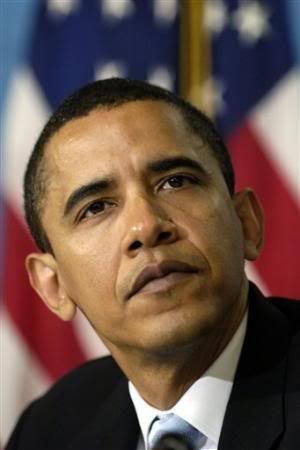
Obama Inauguration Tickets


I heard yesterday something that absolutely stunned me: the tickets for Obama's inauguration speech are selling for figures between $20,000 and $40,000.

Can you believe that the figures are this high?

Selling the tickets this high is illegal, but if they tack on a pen or some other item included with the ticket, it's absolutely legal. I guess that the price is so high because of this historical moment: our first African American president.

Read CNN's article on the subject here.

Don't you think that selling the tickets at such a high price will take the glory and excitement out of this?

Don't you think that this eliminates so many people from attending if they want to?

CNN says that anyone can gain a ticket from his/her congressman or senator, but with tickets at these prices, they won't be giving them out at whim. Even if they are given out, they can be scalped for obscene amounts of money. I think it's ridiculous that matters come to this.

From the CNN article: "Organizers of the inauguration say it violates the spirit of the event and could spell disappointment for people who buy tickets for the January 20 ceremony."

It's going to be freezing anyway. Put a down-payment on a house or buy a car. Watch it on TV; you're still witnessing the historical event.

So, what do you think of this latest development with inauguration tickets?

Wednesday, November 12, 2008

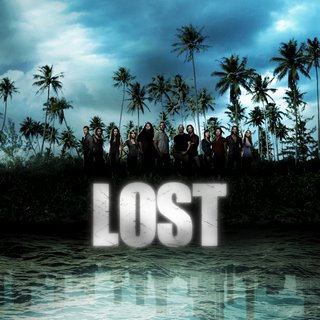
On Lost


Let me just start by saying how much of a Lost fan I am. Since I started watching the first season, I become totally hooked. Each season was absolutely incredible, and I love the direction and the intelligence that goes into the writing process.

I just got thinking about the technicalities for the show. As in, if this really happened, what else would also be going on behind the scenes that isn't necessary for the plot? Or, if people really were stranded on a desert island, what is missing or what are they leaving out?

If I was writing the show, I wouldn't include these things either. But, since I think about the show a lot, I wonder about certain things that we don't think about or that aren't shown on the television show.

I bet that people dream of this situation because it seems like paradise. But, I was thinking of this situation actually happening, and here's what I conjured:

Do they never brush their teeth?
Do they ever actually get to shower with soap, or do they always bathe in the ocean where it's salty?
How do they brush their hair?
Do they have condoms?
Is there toilet paper or do they use leaves?
Does anyone ever get sick from eating too much fruit, too much acidity?
Does anyone ever get stomach problems from the new diet?
How do girls handle their periods?
Do they have deoderant?
Does anyone sunburn?
What happens when cuts get infected?

Or, is the whole point that it's a magical island and no one has to worry about these things? People stay in good health and only need to worry about island problems, not personal hygeine or dietary issues?

I just wonder.

(All of this is excluded from the fact that The Others have their own colony and they can use their supplies. This goes for living just on the beach where none of these supplies exist.)

So, what do you think of Lost?

Tuesday, November 11, 2008

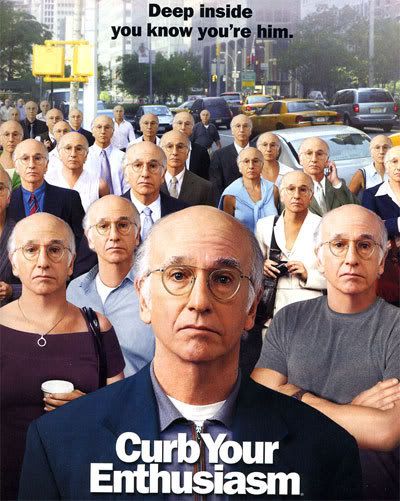
Curb Your Enthusiasm


For Seinfeld fans out there, Curb Your Enthusiasm is a real treat. Larry David truly shows off his talent in a similarly run show. David has flipped the tables and now has a show about HIS life with HIS friends and about HIS life. And, it's just as funny as Seinfeld.

Larry David creates and introduces such true situations that are awkward and happen all the time. I laugh hysterically just at the exposure of such real-life situations. This guy knows how to take uncomfortable situations, blow them way out of proportion, and somehow weave them all together into a cohesive plot. He's brilliant in his ability to do this and do this rather well and hilariously.

Larry has commented on these true-life incidences and issues:

The pants tent: when your pants make a tent when you sit down
Married men and women can't really have a relationship together because it could mean that they are cheating
What do you do when you're kicked out of someone's house and you left a personal item inside?
People who just get too serious when they play golf
Your receptionist talks your ear off and you can't even go to the bathroom without a stop and chat
You walk by someone you know and you don't want to stop and chat because it will be awkward and you don't want to waste the time
The answering machine cuts off the good part of your message
You don't know how much to tip the driver of your cab and you sympathise with his job
You host a dinner party and someone takes over as the lead or star of the night
You wait in line SO long at the pharmacist when it's an emergency
You slip money to the maitre 'd to get into the restaurant, but how much do you tip, and what if you accidentally slip too little?
You aspire to obtain a dream job but you could never actually do it
Kids give you the finger or mock you in the car and you snap back, causing the driver to get very angry
Trick or treaters are either too old or just don't dress up anymore, so do they deserve candy?
You get the wrong food order, and obtaining the right order is always difficult and doesn't work out
You can't take anyone in a thong seriously, no matter what his/her job is
You accidentally feed a dinner guest something they are allergic to
It takes someone in line before you so much time to make a decision on what to order
There are two lines to a cash register and you pick the wrong line that is just much slower than the other you could have chosen
A person hosting a birthday party begs you not to bring him a present, but even though people say that, they don't mean it
You don't know what to do with toothpicks from hors derves at parties
The weatherman is the only job that can't get penalized for being wrong
Can you take someone seriously when they wear a bow tie?
Would you really give your friend a kidney if they needed it?

Does anyone know if Curb is going to have more episodes or if they're done for good?

What do you think of Curb?

Monday, November 10, 2008

New Rolling Stone Format


Rolling Stone Magazine fans out there, what do you think of the new format?

Rolling Stone has changed their format and layout from larger-print, larger pages, and non-glossy pages. Now, they have a smaller magazine, smaller print, and glossy pages. It looks just like a normal magazine; it no longer holds its unique design.

I liked that Rolling Stone used to be different than other magazines. I loved the large pages that you could fold back easily. I thought that its style reflected its different nature from other magazines, its break away from the normal mold that the rest of the world fits into.

At first, I was really angry about this change. I thought it was going to be really bad. But, I hate to admit, I don't mind this change that much. I love the feel of the magazine. I like that it now can feature more articles and lavish pictures. It's not that bad after all.

I really do like what they're doing despite the fact that it breaks from Rolling Stone tradition. With Obama on the cover for his third time in just a few short months, the "change" theme coinsides well with what Jann Wenner was talking about when he addresses this in the first new issue. He connected change with Obama and his campaign with the change of their new layout. I thought it to be a clever connection.

So, now that you've seen this new change, what do you think of it? Should they have stayed with the old version or is this one worth it?

Sunday, November 9, 2008

Howard Stern on Obama Candidates


I meant to post this a while ago, before the election, but it's still pretty interesting. This is a bit from Howard Stern's show on the election.

Watch the clip here.

What they did was, they sent a man in the streets of Harlem and asked Obama supporters why they support Obama when they attributed McCain's policies with him. So these supporters say they like Obama because of McCain's policies. It's really weird.

Some of these people even attest that they would be okay if Sarah Palin was vice president. Now, that is clearly McCain's running mate, but these people don't stop to think about what they're being asked. They just go with their candidate.

I wonder how informed people really are on the candidates and their policies. So much crap is published and posted and publicizes that sometimes the wrong information can be stuck in people's heads and there's no turning back. Especially when that information is repeated over and over again, then it becomes second nature even though it might not even be true.

Freedom of speech is a powerful tool, or weapon if you look at it in that way.

So what did you think of the video?

Saturday, November 8, 2008

Create Bands

This is my 400th post. Wow, that's a lot of posts.

Anyway, I was kind of bored today, so I was searching around this old website I used to go on when I was in middle and high school when I was bored and talking with friends on AIM. The website, ironically enough, is called bored.com. If you ever are bored, check it out. It has a lot of games, quizzes, and other interesting material to read if you have spare time.

What I used to do in the background of AIM chatting was this specific link on bored.com, Create Bands, which is a fun place to create your own band and change the music you play.

You pick the members of your band, and you pick what beat they play. Then you sync up the music to your liking. You can have some crazy sound, some smooth sound, a hard-rock sound--it's up to you. I liked being on the computer with it on because you can make your own rhythm as you're doing other things too. Check it out--it can get pretty involved.

What band members are lame? Which do you like? What do you think of Create Bands?