Sunday, February 28, 2010

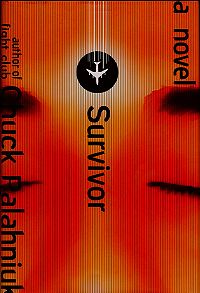
Survivor


No, this post is not about the television show Survivor. This post is about Survivor, an excellent book by one of my favorite writers Chuck Palahniuk. I'm on a literary quest to read all of his novels since I enjoy each one more and more. His novels have such unique content and are written in his own unique style--he impresses me more and more with what he publishes.

Survivor, in a nutshell, is about Tender Branson, a man who was raised in a death cult yet escaped before his entire community committed suicide. Tender is the last surviving member of the cult and receives a lot of media attention from it. He is set up with an agent who basically publishes anything under the sun for him and gets him on television as much as possible. He does nothing; everything is scripted and created for him. He is the face and name to this franchise.

What makes this novel REALLY interesting is that it begins with Tender on a plane, telling us that he will soon crash to the ground. He has hijacked a plane, with just him on it, and is going to fly the plane until the gas runs out. In the meantime, he tells us his story. He then begins telling us what happened from the top. The rest of the book is a flashback.

The pages of the book actually go in reverse order, so instead of starting on page one, we begin on page (for example) 312. Even chapters are in reverse. It's these kinds of little touches that makes this man a really interesting person to read.

We now need to understand Tender's cult, the Creedish, who turned him into the odd person that he is. We don't blame him; it just explains his odd tendencies throughout the book. Tender's cult believed themselves to be servants to the human race, and they were waiting from a sign from God so that they could then return to serve him (by killing themselves). Put in better words, here is the purpose to their names and jobs:

"They are extensively trained in etiquette, housecleaning, and other menial labor, after which they are baptized and sent out into the world to make a living. Every month, they are expected to send back money and a letter of confession. "Tender" is not really a name, but a title, which is given to all male children except the firstborn, who is called "Adam". Likewise, all female children are called "Biddy", including the eldest. "Tender" is meant to denote one who tends; "Biddy", one who is biddable. All but the firstborn sons and their wives are discouraged from having sex of any kind and are forbidden to marry, and the latter are expected to have sex only for procreation. All the Creedish wear highly recognizable clothing, both inside the community and out. This makes it easy to spot another member of the Church in the outside world."


Thus, Tender has difficulty with romance. He feels he does not deserve it and shies away from it. Typical to Palahniuk books, Tender constantly provides us with little tips on how to cook or clean. They are really in depth to do the best possible job to cook or clean. It is not common knowledge by far. He will discuss mixing herbs or chemicals to create a good cleaning solution or cooking sauce. He will explain the best procedures for cleaning or the best way to take the shell off of a lobster. It's interesting, yet we see why he possesses this knowledge. This quirky behavior isolates him from others.

In present time, when the novel begins, Tender is living a "normal" life ten years after the mass suicide. He is cooks and cleans for a wealthy family. The odd thing about his life is that his phone number was misprinted in a suicide hotline pamphlet. Thus, he receives tons of phone calls from suicidal people who ask him for advice. They expect someone to tell them not to do it, but Tender will tell them the opposite. He likes having the power over them (like he never had) almost like he is God. It's pretty twisted. Sometimes when he tells people to do it, they chicken out or it stuns them so much that they don't. Other times, people just need to hear what he tells him, and they do kill themselves which is more peaceful to them. They get what they want.

In one instance, Tender tells a neighbor of his to do it when he calls. Once he goes through with it, he learns that his sister, Ferility, is upset about it. He visits her brother's grave, and the two of them start to talk and see each other around. Tender starts an interest in Feritlity.

Fertility soon calls the crisis hotline, not knowing it's Tender, and Tender disguises his voice and tries to talk her out of comitting suicide. Fertility soon becomes interested in this man on the phone, and they keep talking. They even talk about Tender and says how ugly and boring he is. The man on the line (Tender) convinces her to start seeing him because that is the only way the man on the phone will meet up with her.

The strange thing about Ferility is that she has visions of the future. She seems to know EVERYTHING that is going to happen, and that makes her crazy. She has no element of surprise in her life because she always dreams what will happen. This gives her the power to show up where Tender is going to be and tell him things that are going to happen to him.

Meanwhile, Tender is essentially given a make-over and turned into a celebrity for the purpose of making money for the agent. Tender goes along with it. He doesn't really care what happens to him. The agent produces books and television shows for him. He has followers. Fertility gives him prophetic words and predictions to make live on air, and people follow him likes he's a religious leader.

It is discovered, as the FBI investigates, that there are more Creedish survivors. They are sought out because the Creedish also engaged in some illegal activities which they could be prosecuted for. The news continues to show more Creedish victims killing themselves which makes Tender more rare, thus more interesting. There ends up being two last victims, Tender and his brother Adam, who constantly follows him around.


The climax of the book comes when Tender's agent wants him to get married live during the Superbowl halftime show to promote his upcoming autobiography. Tender has been wanting to kill himself the entire time; he just has never found the opportunity. Fertility runs across Adam who wants to frame Tender for murderering his agent to bring him down. Unforuntely, Tender's agent will die anyway during the Superbowl half-time show (as she predicts) so she helps Tender stall long enough so he can escape the show. He then becomes a man on the run, escaping the so-called murder of his agent.

Tender, Adam, and Fertility escape and are on the run. They steal cars and trucks to hop around the country. Fertility soon ditches them though for unknown reasons. They are on their way to the Creedish community to see what it has become. As Adam discusses ways to uncorrupt his mind, Tender gets so mad that he crashes their car into the middle of the landfill, what the Creedish community has become.

When they crash, a figurine of Tender shoots into Adam's eye. Adam asks Tender to disfigure him with a rock so that he can be left alone when he goes to jail. Tender reluctantly agrees, and Adam says he'll tell him when to stop. Unfortunately, he never does, and Adam is killed. Fertility soon shows up, and they leave the scene.

That night, Tender finally gives in to pleasures with Fertility. She tells him in the morning that she is pregnant, and then tells him that she has to travel to Australia. Tender follows. Fertility tells him that someone is going to hijack the plane, and it ends up being him. Fertility tells him that there is a way to escape, which brings the book back to the beginning. Tender doesn't seem to find a way to escape because the book cuts off in mid sentence. We are left wondering if he lives or dies.

But, on Palahniuk's website, he has stated that he believes Tender survives. It seems more like he dies, but I guess it's all just speculation.

Overall, it had bizarre points to it, but I found it really interesting. It was pieced together in an intelligent way that was captivating--it drew me back to the text often. He created such a satirical work that it makes it interesting to see what American culture aspects he's poking fun at. Analyzing this text would be VERY fun to do.

The book asks many great questions: How do we handle traumas? Is there such a thing as fate? Why do people want to commit suicide? How do our environments effect who we turn out as? How much of the media is constructed and fake? How far will entertainment industry go for a profit? Can we overcome our pasts, no matter how traumatic or intense they were?

Palahniuk is a must-read author. He also wrote Fight Club (his most notable work), but he has others that are just as interesting as this book. Survivor was his second written book. I find this man utterly fascinating and I hope that others do too.

So what do you think of Survivor?
Saturday, February 27, 2010

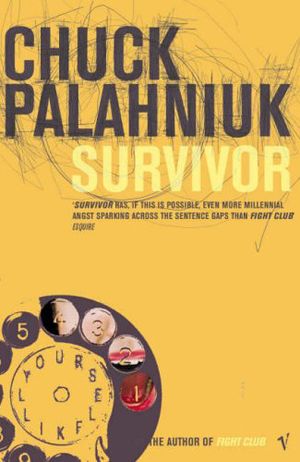
The Invention of Lying


Ricky Gervais is a comic genius. In my opinion, he is changing comedy and how we view it. Whether it's television (with The Office) or movies (with The Invention of Lying), his ideas are just so unique and hilarious that I can definitely see them influencing the path that comedy will take.

The Invention of Lying was such a good movie that I watched it twice in the two days I rented it. I never do that with movies. I like to watch as many movies as I can, so I rarely watch movies twice, let alone in two days. I thought that this comedy was SO radically different from others that I had to watch it again. I felt like I missed jokes and really wanted to revel in how funny and smart they really were. I am very impressed with Ricky Gervais and his innovative ideas.

So, the movie is essentially about what it sounds: a man who invents lying. That means that his surrounding world tells the complete truth. People are blunt and honest with one another. No one lies. There is complete faith and trust. No one would even THINK of lying. Except, Gervais's character does because he comes at a tough crossroads. He loses his job, and since he loses his job, he can't pay his rent. Thus, he is facing being evicted from his apartment. While at the bank, he has the opportunity to lie to get the money to pay his rent. Once he lies, he feels a monumental wave of an idea come over him: if he lies, he can get anything he wants.

The movie then goes through waves of his exploration of lying. He tries to lie to get sex, but he doesn't like doing that. Then he lies to get money at the casino. Then he lies to get his job back, and since his job is writing history, he makes up history to make the best movie ever and to earn the most money ever. He lies to try to get the girl even though Rob Lowe's character tries to get in his way. Except, the only thing he doesn't use is complete lies to sway the pretty girl to like him. Slowly, she does see the good in him even though she is so focused on reproducing and fears that if she reproduces with Gervais that her children will had pudgy snout little noses. That part, I find, to be utterly hilarious.

At the end, she does see him for who he is, and they do have a pudgy little kid with a snub nose. He then learns the trick from his father, so they will both be successful in their world.


Ricky Gervais's character is eventually discovered for knowing too many things which earns him more fame. When he tells his dying mother about how beautiful the afterlife is, he soon becomes the man who knows. He talks about what happens after death and what God is like. Could you imagine having to come up with that?

Anyway, the movie had so many excellent guest stars. They had Rob Lowe, Tina Fey, Jennifer Garner, Louis CK, Jonah Hill, Bobby Moynihan, Jason Bateman, Phillip Seymour Hoffman, Edward Norton, Jeffrey Tambor, and of course, Ricky Gervais. They all did a FABULOUS job and were all hilarious. Edward Norton was really the surprise as the traffic cop.

The writers just did a really good job with creating jokes for their plot. Some movies have good ideas but they don't write good dialogue or scenes to go with it, but this movie really capitalized on its good idea. It was hilarious in every scene, and it even gets funnier when you watch it again to catch for jokes you missed. Overall, it was enjoyable on many levels. It was funny yet it had a good message.

But man! Budweiser must have contributed a pretty penny to the film. They were mentioned EVERYWHERE. That and Pizza Hut...

If you are a person who enjoys comedy as a genre of film, this is a must-see. You won't regret it.

So what do you think of The Invention of Lying?

Friday, February 26, 2010

Shrink


Sundance films always intrigue me. And, movies that include Kevin Spacey also intrigue me. Thus, I picked up Shrink and in the end, I really enjoyed it. I respect the films that Kevin Spacey selects ever since he starred in American Beauty. For those who enjoy his work, this is quite an interesting piece to view.

Shrink is about what it sounds: a psychiatrist. Kevin Spacey plays this psychiatrist, Dr. Carter, who lives in Hollywood and treats patients from movie stars to high school students. The irony lies in the fact that Dr. Carter really has his own issues--his wife killed himself, and to handle it, he smokes all the time. His friends try to intervene and stop his drug abuse, but he rejects them and tries to continue on his own path of coping.

Meanwhile, his book about happiness (which was really just a self-exploratory way of trying to cope with his depression) is selling well. The movie branches out to focus on other characters, those that Dr. Carter is helping. Their story lines connect throughout the film.

One subplot has to do with Patrick, a movie agent who deals with famous actors and actresses, two of which are treated by Carter. One is Jack, played by Robin Williams, and another is Kate, who deals with her rock star boyfriend who cheats on her. Eventually, Kate and Carter run into each other enough outside of the workplace that they start to have feelings for one another. Although this is not exclusively developed, the viewer is left with the feeling that these two will pursue a relationship, giving Carter some closure on his dark past.

Another subplot focuses on Jemma, a struggling teenager whose mother has just committed suicide. She starts skipping school and pursuing in questionable behavior; thus the school forces her to see Dr. Carter. She has a difficult time opening up to him, and they both do not realize at first that they are fighting with the same issue within themselves: losing someone to suicide and not understanding why. In the end, they both discover this secret, and they both read the suicide notes left to them together. A strong bond then forms between them.

One of the movie's bigger subplots has to do with Dr. Carter's friend Jeremy, a struggling screenwriter who was closely related to Carter's wife. He is the only friend who accepts Carter after he denies help from his addiction. Jeremy gives a screenplay to Patrick, but since he is so busy, it is intercepted by his assistant Daisy. The two of them begin to see each other after that encounter. However, Jeremy's screenplay is similar to another film that is coming out, so that piece of writing is basically useless.


Jeremy then flounders and wants to succeed. For some material, he breaks into Carter's office and steals the case file on Jemma. Interested in the dark material he finds, he befriends her and hangs out with her. He then writes a screenplay on her life. Jemma soon finds this screenplay and yells violently at Jeremy. Once Carter finds out, he starts a brutal, vicious fight with Jeremy. Now Carter must stop seeing Jemma AND his friendship with Jeremy is in question.

However, meanwhile, Daisy forwards the screenplay to Patrick, who loves it. Daisy is promoted to being a producer and will start on this film. The movie ends with Patrick, Jeremy, Carter, and Jemma in an office talking about making the film. It seems as if all loose ends are tied up.

And, since Carter recently got into a drug-induced accident and saw his life flash before his eyes, he quit smoking. He even went on live TV and denounced his book, coming clean to the world. Characters all seem to have closure.

Overall, it was a smart film. I think it is smart writing when so many subplots can tie together and eventually weave into one. We start to see characters individually and undertand their background, and then we can better understand their decisions and actions once they all come together. It's a nice build up to try to understand their motives and to see their character development.

The film also had nice themes. Sometimes we can receive help from the strangest of places, those we don't expect to help us perhaps. Sometimes they are the most unlikely candidates. People need to come to their own conclusions to find peace. It can't be shoved down their throats--it can be a self-exploratory process. But, one must confront the past and the issue in order to overcome it. Numbing the self will not help get over it; it will just prolong the internal conflict. And, one must pursue his or her passions; otherwise, won't we always wonder, what if?

Kevin Spacey engaged in some fine acting, let me tell you. His character was different from others. He wore the pain of his character on his face. He always seems to impress me, no matter what kind of film he does. Even in Fred Claus, he still was brilliant.

I can see why this film did well at Sundance. It's a good one. If you like independent films, Kevin Spacey, or are interested in psychiatry, screenwriting, or itnernal conflicts, this is a good choice. It's not the most popular film, but some of the more popular films are quite boring and are just too over-the-top blockbuster predictable garbage. Yup, over-the-top blockbuster predictable garbage.

That's why I most enjoy indie films, Sundance films, the step right beneath big blockbusters. Focus Films. You get the picture. Any recommendations if I like these kinds of films for future views?

So what do you think of Shrink?

Monday, February 22, 2010

Conan Off the Tonight Show


Alright, this blog is a bit overdue and out of date, but I wasn't in my full swing of blogging at the time of its newsworthy height. But still, I need to vent because the issue still angers me: Conan was essentially kicked off of The Tonight Show.

Being the avid Conan fan that I am, it seems natural that I would get this livid over this issue. Of course I rise to the defense like a mother whose child has been cheated or slighted. It's hard to put into words how much of a travesty this entire fiasco really is, but I keep trying to tell myself that Conan has bigger things in store for him. I really do believe that everything happens for a reason, so hopefully this will only launch Conan to greater heights. If NBC is going to treat him this way after working for them collectively for over 20 years, then maybe he doesn't deserve them after all.

So we all know the Conan story. I wonder if I am being too biased or wounded over the whole thing. As my father said to me, "How can you feel so sorry for a guy who got paid MILLIONS of dollars to walk away? It's not like he's totally left in the dust screwed." Fair enough. I know he got good compensation, but it seems that it's not about the money to Conan. It never was. It was about "having fun on television," which is what he always claimed. He has fun making comedy and making people laugh--I am sad that he isn't doing that every day.

But, I want to know Jay's real side of the story. I haven't seemed to find it or run across it yet. Does anyone know what his deal is? To be honest, I can't understand why he would want to come back. He doesn't need it anymore. Isn't it selfish for him to take it away from Conan forever just because he wasn't succeeding on his other show? And what is this ridiculous NBC/Jay Leno love affair anyway? Why not just cut him loose? Why is Leno choosing to end Conan's career? I'm sure he has other options!


When I first heard about it, I thought it was a total joke. How can they actually kick Conan off? And then the issue suddenly started to snowball into the disaster that it became. I then watched Conan avidly, hoping for the news to change. It feels like he only just arrived in LA, and now he's been ditched. He left his whole life on the west coast to come out here, and not even a year later he is kicked off the show. What a mess.

I thought Conan's jokes the whole week prior to the last episode were hilarious in terms of giving digs to NBC. Especially his bit on spending a lot of money to piss off NBC--that was gold (even though it really wasn't wasting that much money). In any event, it saddened me because everything on his show worked so well. His band. His writers. His sidekick. The jokes. The bits. Everything meshed SO well, and I'm afraid that, from now on, he might not get that back again. What if he doesn't get everyone back? What if he isn't picked up? Now I sit and fret! I miss watching Conan and hearing his hilarious perspective on the world.

But I do think Conan will get picked up though. He's so popular and has such a wide fan base. I just don't know if there is a venue for him, and if those who are willing to have him can pay him what he deserves.

Conan's heart-felt speech at his last show almost brought me to tears (just like it did him). He's right about not being cynical; I'm trying not to hate NBC for it. He really is lucky to have worked every comedian's dream--the host The Tonight Show. It's just sad that it had to end so quickly. I bet it's partly because Conan is so out there, he's not as safe as Jay. He's more like Leno, causing a controversy every now and then. Oh NBC, take risks!

In any event, I've written more than I've wanted to because now I'm just making myself want to watch him even more! Does anyone know any rumors of his future or why Leno has decided to take his show?

What do you think of Conan leaving The Tonight Show?

Sunday, February 21, 2010

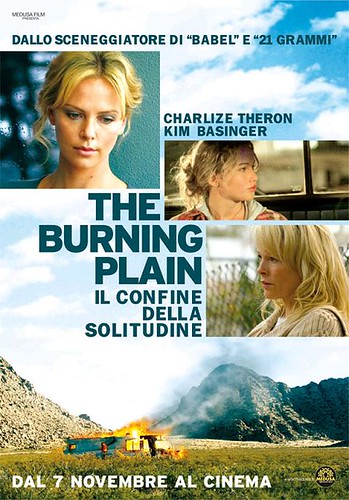
The Burning Plain


Yesterday I saw a movie that really stuck with me: The Burning Plain. The preview kind of locked me, even though it seemed like it belonged on Lifetime Movie Network, but it still looked poignant and deep enough to be somewhat enjoyable.

Charlize Theron and Kim Basinger drew me to it too. They tend to make decent decisions in selecting movies to star in. And this one wasn't bad. In fact, it's still resonating in the back of my mind, showing me that the message is a good one, that the writing is really effective, that the story was pretty interesting.

What I really liked about this film was the way the story was pieced together. Nothing was in any sort of chronological order. You had to constantly piece together who was who, what this plot had to do with this plot, how this murder happened, etc. The writing gave enough clues for it to still be interesting yet you still had to continuously discover and identify plot points and characters. That is interesting writing. That is smart writing. That is hard writing to do.

The story itself was interesting, yet kind of sullen and depressing at the same time. All in all, when it's told in chronological order, it's about a teenage girl who discovers that her mother is cheating on her father with a Latino man. (They live somewhere in Arizona or New Mexico). They get together in an abanadoned trailer in the middle of nowhere and build a small life together out of their true love. Well, this teenger named Mariana gets really mad one day and follows them there. Only meaning to scare them out of the trailer, she lights it on fire. However, the gas leaks and blows up the trailer, killing them both. She did not mean to do this, but is now scarred forever.

Mariana is somewhat stalked by the cheating father's son, Santiago, and they soon become close friends as they try to figure out their cheating parents' affair. Soon, they fall in love and start making love. Their families find out and get really mad. Mariana finds out that she is pregnant. They run away to Mexico where she has the baby and abandons the family.


This plot then cuts to the future where Mariana has run away (Charlize Theron) and works at a fancy restaurant. She sleeps with any man she sees. She feels so much regret for her life and feels nothing. She has no respect for herself really; she probably doesn't even feel like she deserves to live. With a role model of a cheating mother (one that she destroyed) she then turns to promiscuous sex herself, perhaps trying to hold onto what she has left of her mother.

Santiago, in the future, gets into a plane crash. He asks his brother and daughter Maria to find Mariana and bring her to them. Santiago will survive but with bad injuries. This brings the family back together after some intense struggle, and the plot ends before we get the satisfaction of seeing the family together once again.

Santiago was a great single parent who always seemed to be waiting for Mariana to come back. That is his true love, and he was a good soul who was stuck in a bad situation.

Overall, it was a very smart film. I really enjoyed it. Of course, all of that was pieced together in fragments which made it more interesting.

The acting was really good too. Therone and Basinger played really damaged and confused women. I bought it. They put on two very powerful performances.

It brings up many questions: What is true love? What do we do with such heavy guilt when we can never take back what we have done? What do you do when you cannot share something so painful that you have done? What if you aren't ready to change or to grow up? What if you don't have a parent to identify with or their characteristics are so terrible that you don't know who YOU are or who to be? What do you do if you know your parent is cheating? What if you have so much pain that you just don't know how to live?

Even though those are heavy and harsh topics, they are interestingly splayed in this film. It is an emotional film, but it's worth the watch.

So what do you think of The Burning Plain?

Saturday, February 20, 2010

Milkweed


Milkweed: A decent tale about the a Jew's perspective from the Warsaw ghetto. Milkweed is a young adult novel told from the perspective of a Jewish orphan who is not one hundred percent keen on the politics and horrors striking around him.

The story is told from the point of view of Misha, the orphan, and is quite scattered and confusing since the narrator is both confused and in-the-dark about what is going on around him. At times, it was a little difficult to piece together what was happening, but since I have done a great deal of study on the Holocaust and World War II, it wasn't that hard to piece together what he was talking about. However, if I didn't know as much as I did about this time period and what was going on, I might have been just as confused as Misha, given I was a young, middle school reader--the audience of this novel.

First Misha is told to be labeled as a gypsy. They were also targets at the time, not just Jews. Jews are called very nasty names throughout, to show the utter discrimination and level that they were brought to by the Nazi Party and surrounding Germans. Misha, being an orphan, must steal food to stay alive. In his attempts, he comes across a young girl named Janina who is also Jewish. They become good friends and he steals foods for her.

Soon enough, Jews are forced into ghettos. Misha and Janina are both penned into the Warsaw ghetto, and ghetto life is thus depicted here on out in the book. There is little food and warmth--all trees are cut down around them. Walls go up around them to keep them in. People are crammed together to live. People are shot or hung daily; bodies of all ages lie in the streets. It is a shocking life for these young children.

More horrors come: Janina's mother dies of typhus, Misha's friend is hung in the square with a sign over his chest warning others not to steal, and then the deportations come. People think they are going to a peaceful place to live. They think that when people mention "ovens" that food will be baked in them. We all know otherwise. It kills me that there was so much optimism in such a dark time, when in actuality, the brutality and horror only got worse once they boarded the trains to be sent to concentration camps.

But can we blame them? Isn't it honorable to keep thinking the best of things in such a dark time? Or, is it better to try to be realistic? But how could they be realistic? How could they see that things could get even worse and darker? Who would have thought that man could stoop to the level of creating labor camps with the aim of mass killing an entire population? Could that even be imagined or dreamed? We can see this in retrospect, but we cannot assume or blame them for not thinking this. It is too cruel to think this of human nature. It's not something you see everyday.


Back to the book: Misha is warned from an old orphan friend of his named Uri, who escaped and claimed a false German identity, to run because the trains led them to bad, bad places. Misha tries to take this advice, taking Janina away from her family. Janina refuses to leave her father and runs to the trains, thinking they will take her to a candy land. Trying to save her, Misha is shot and left for dead.

However, Misha is not killed. His ear was blown off, but he is much alive. He runs into a farm which keeps him for the next three years. He works there until it is safe to venture out into the world. Misha never does reconnect with Janina--we can only assume that they were killed in the concentration camp. Misha tells his tales on a street corner where he meets his wife and has a baby. She leaves him afterwards though because she cannot get over his psyche and strange habits, being damaged from this period of his life.

The book ends with him working in a grocery store. His daughter comes with her new daughter and asks him to provide a middle name for his granddaughter. Not surprisingly, he comes up with Janina.

The title Milkweed comes from Janina and Misha's conversations about angels and heaven. It's hard for them to grasp the concepts, but it's good to hold onto something light and positive during this time. The image of the milkweed seeds floating into the air is not only on the cover, but it is described throughout the book. It's the little things, the little beauties in the world to hold onto even when the rest of the world turns its back on you. There still is beauty amongst a surrounding world of hate and destruction.

This book was a very quick read, an easy read for a middle schooler. Some of my students are currently reading this for a project. I can see why some students might not like this--the ones who know more about this time period will have an easier and more enjoyable experience with this book. Personally, it didn't grab or excite me, but that could just be the material.

Overall, I would recommend this to a younger population, particularly males. But, that's not to say a girl would not enjoy this. The chapters are broken up so it is easy to pick up and put down in multiple sittings, or it could be read quickly in just a few short hours.

So what do you think of Milkweed?

Friday, February 19, 2010

My Sister's Keeper


Since I'm on my Jodi Picoult run, I had to read her most popular book, My Sister's Keeper. I also wanted to read it so that I could compare it with the movie out that is based on the book. Yuck, what a joke that was.

The book was not a mistake to read. I thoroughly enjoyed it. I thought the characters were well crafted, and I liked reading from each perspective. Each one had his or her own voice that was interesting to see. Especially with such a controversial topic, cloning, and when there are sides to a story, it was very cool to get inside the head of different people on either side of the story.

Essentially, My Sister's Keeper is about a thirteen year old girl named Anna who wants to become medically emancipated from her parents. Anna was created by means of cloning so that she could donate parts of herself to her older sister Kate who has leukemia. Unfortunately, as Kate's disease progresses, she becomes in need of a kidney. This is when Anna seeks out legal help from Campbell Alexander who takes her on as a client.

Anna's mother Sara is appalled, always being the advocate for Kate, and decides to fight against them since she is a lawyer. Brian, the father, has a difficult time pleasing both parties as he does want his daughter to survive but he also wants his other daughter to have a choice. The oldest son Jesse struggles with being recognized. Starving for attention, he sets houses on fire to try to get people to recognize him and to try to mask his suffering. Ironically enough, his father Brian is a firefighter, and he soon catches him and puts a stop to his attention-seeking behavior.

In the midst of the case and the trial, a guardian ad litem is appointed to Anna. Her name is Julia Romano, and she is the old, first love of Campbell Alexander, ironically enough. The two of them have to work together on the case, and even though it starts out rough and heated, they slowly fall back into love. The twist with Campbell is that he is driven on his career and has a service dog named Judge. What he needs the service dog for is unknown until the end. When people ask what it is for, Campbell makes up a different lie every time to shield himself from his actual problems.

In the end, Campbell reveals his problem when he has a seizure in court. It is then learned that he has epilepsy, and his main reason to take on Anna for no financial gain whatsoever is that he realizes what it is like to have no control over your body. Hm. Interesting.

Spoiler coming...

Anyway, the ending really through me off guard. First, Anna expels why she brought this all the way to trial: Kate wants to die. The only way for Anna not to give her kidney to Kate would be to literally fight off her mother with a lawsuit. Kate is sick of fighting for her life and just wants to slowly give up and let the disease overrun her body like it's been doing for the past fourteen years. She wants her family to start living their lives instead of revolving theirs around hers. What an intense scene that was!

After that twist, the judge discusses it with Kate and grants the victory to Campbell and Anna. But, here comes the REAL twist: on the way home from the trial, Campbell and Anna get into a horrific and fatal car accident. Campbell walks away hardly harmed, but Anna is left braindead. The doctor asks for them to consider organ donation... Just like Kate needed. It is then decided to save Kate with Anna's organs since Anna has no chance at a real life.

Woa. Never saw that one coming. Kate ends up living on instead of Anna, what we all pictured. I don't know if it's genius to write the exact opposite ending that we envisioned or what. I don't know if I love it or hate it.


You know, thinking about it, it's probably the best way it could have been done. Instead of going with the predictability of the leukemia patient dying, we go with the healthy thirteen year old. No one expects her to die. She lives her life without thinking of death and has no attention paid to her, yet she is the one who dies. It makes her parents think about all of the time and attention and devotion paid to Kate when they actually spent far less time and focus on Anna, the one who really does die. If anything, this is the way their parents truly do learn. And then Kate gets a new perspective on life and starts living for something since she was granted this second chance. Not too bad, now that I really ponder it.

And maybe I've come to this conclusion because of the filthy, trashy, atrocious excuse for a movie they created out of this. Yuck, what a waste of time. Not only were their Blockbuster choices for actors horrible and off-base (I mean, who buys Cameron Diaz as Sara let along the HORRIBLE choice of Alec Baldwin as Campbell; I love Alec tremendously, but he's no bachelor lawyer of Campbell--try Jude Law maybe), but the differences were overwhelming. They left out so much and twisted the plot so much that it hardly resembled the book.

First of all, Jesse had no issue with burning down houses. His character was too soft in the movie and looked too young and hurt. Jesse is supposed to be angry and not give a damn, not look like a wounded puppy. He smokes cigarettes, drinks, drives around random places, makes scenes, and burns down houses. The Jesse in the movie looked like a nice kid in the back of the classroom. Poor choice.

Then, they didn't even include Julia Romano's character. Julia makes Campbell interesting. Now we just have a lawyer who cares, not one who is struggling over the past and future. Why not throw a romance into it? Julia was central to the book, but they edited her out to add more unnecessary scenes to the family. Barf.

Lastly, THE ENDING??? I don't know where to begin here. What an atrocity! The ending was the COMPLETE opposite of the book's ending. Instead of Anna dying, they have Kate give up and die in the hospital. This COMPLETELY changes the meaning of the book, which in turn is a slap in the face to Jodi Picoult and her message. How did she let this happen?

I discussed previously the original ending's message. With this new ending, it's giving way to what we all thought originally. BORING. Not only that, but it excuses the parents' behavior to isolate and focus on one child. They don't learn anything by their daughter dying of cancer. It's the easy way out for their characters. There's no growth. It's easy, it's expected, it's Blockbuster. In the book, the parents go through depression and their own problems to cope, which they eventually will come out of. They realized their mistakes and are trying to cope and figure out life's true meanings.

By having Kate tell the story, in the epilogue of the book, we FINALLY hear her voice. This is the first and last time we hear from her, which is symbolic in itself. She now can speak, is heard, and wants to live. Instead of giving up on life, he fights to stay alive. Kate has a new perspective on life. She doesn't want to commit suicide; she now wants to live. By the moving killing her, it's basically okay-ing her suicide plot which should NOT be the message of the film. That is a horrible message to send to viewers. That is not what the message was intended to be.

Spoiler is over.

If you've read the book, don't even bother watching the movie unless you want to become critical or angered, like I have here. I wonder if Jodi Picoult had any sort of voice towards this film or if you just sell your rights to your book and whatever happens happens. If that's true, I'm very disturbed.

The book was well done, but not the movie. Tsk Tsk.

Stay tuned for my ideas on Change of Heart which will come soon. Hopefully I can find more time to write as I am now bogged down in the world of having a real job. Hopefully I can pick up this blog habit that I do so enjoy. Smile.

So what do you think of My Sister's Keeper?

Sunday, December 13, 2009

Keeping Faith


My students drew me to Jodi Picoult. They read every book of hers, and they keep reading, and reading, and reading. Now, it's my turn to read.

The first book I could get my hands on (since they can be so scarce) was Keeping Faith. Since it's about religion, it really wouldn't have been my first choice, but it was the only choice. For her first book, I'd say it was pretty good. It must be because now I'm reading a second book of hers: The Tenth Circle.

Now that I'm in the middle of her second book, I can see patterns in her books. Each book takes on a controversial topic that she wants us to think about. They make us consider our morals and our stances on such topics. Keeping Faith is about religion; The Tenth Circle is about rape. When I'm finished, I will pick up The Pact which is about suicide. I kind of like this pattern she's got going. I think it's pretty smart.

Keeping Faith sounded a little tacky, but Picoult did it in an alright way. Mariah White is a mother who is bored with her life, and her husband is bored with her. She walks in on him having an affair which causes them to separate. Amidst this familial struggle, Faith "starts talking to God." She calls God her "guard" and refers to her as a woman. At first this causes trouble just with Mariah and her mother, but eventually it catches the attention of the media.

Faith engages in such activities as reviving her dead grandmother, curing an autistic man for a short period of time, curing a baby with AIDS, performing stigmata on her hands similar to Jesus's wounds, and telling personal information that she would have no way of knowing. It's a little out there, but you have to have "faith."


Two side plots go on in the meantime. First, Ian Fletcher, an atheist TV host whose job is to discredit acts of God to prove his point, seeks out to bring down Faith White as his next episode. He comes to the town to point out her flaws, but for some reason, he can't find any. He slowly gets close to the family and closer with the Mariah. It's easy to predict that these two seemily opposite people fall in love.

Next, Mariah's husband who cheated on her, Colin, sues for custudy. A custody battle in court then ensues. They peg Mariah as unstable from her earlier suicide attempt (after Colin's first affair) and with a made-up psychological disorder that Mariah has. The court scene went on for a BIT longer than I would have liked, but I think all of the evidence presented was crucial to the plot. The succession of events also was significant towards the end result.

During the trial, Faith falls deathly ill. She has been sentenced away from her mother with a restraining order, but she gets worse and worse as she is away from her mother. But, Mariah can't keep herself away. She goes to the hospital despite the order, and for whatever reason, Faith goes from critical condition to being fine to leave. This is Faith's last act of God to prove that she belongs with her mother.

The book ends ambiguously. It ends with Faith wondering where her God is, calling out to her. But, we don't know if she has gone from her life completlely or if she will always be there. I like that there is no closure. I think it adds more to the story. But, people do get closure with the romance since Ian and Mariah seem to hook up in the end.

I can see why so many women connect with this book. These characters seem so real because they have such honest, true flaws--flaws that we all might face. I think women connect with these characters, male and female, because they might reflect parts of themselves or others they know. I just think it's good writing. She develops an in-depth plot that pans out into so many different avenues that I never predicted. She connects earlier plots and shows such character development among characters. I'm just astonished.

I would recommend Picoult books to readers, but I don't need to. She already has such a VAST audience that has read all of her books. I am the one behind. But, this is my way of giving approval. I like it. I'm going to read more.

So what do you think of Keeping Faith?

Sunday, November 29, 2009

Away We Go


I love good writing in movies. You don't normally see it too often. Luckily, Dave Eggers, a very talented writer, has been turning to screenplays lately. He just finished working on his adaptation of Where The Wild Things Are, and here he has created a wonderfully smart romantic comedy, Away We Go.

Away We Go is a film he co-wrote with his wife, Vendela Vida. It stars Maya Rudolph, who is amazing in a dramatic role, and John Krasinski, who plays a similar role that he's used to: a mellow, easy-going, funny-but-lovable guy. Having been created by a married couple, one would wonder if the roles are in any way similar to their own relationship. I wonder if the characters are closely bound to the writers themselves.

The film is about a couple, not married, who become pregnant. When they visit Burt's parents, they drop a bombshell that they are moving thousands of miles away. On the way home, Burt and Verona discuss why they're even staying where they live, in New England. They think they are "fuck ups," and decide that this new baby will help them become better people.

The couple decides that they will move to somewhere new for a fresh start. So, they visit all of their friends and family that live around the country to decide where they will move to. Along the way, they meet some crazy people who shed different perspectives on raising a family.

They travel to Phoenix to visit Verona's crazy old boss. They are too outspoken and treat their children like they are crazy science expirements. Then they travel to Tucson to visit Verona's sister where Verona and her sister discuss their deceased parents, drawing upon absent parents and death. Then they travel to Madison, Wisconsin to visit Burt's childhood friend. She is too "granola" and over-the-top with being an earthy mother, and they leave after they offend them with buying a stroller since it makes the mother "push away the baby when it should be held close."

Next, they travel to Montreal to visit their college friends. They have a diverse family of children, all adopted, all different races, all different ages. The woman cannot become pregnant, even though they keep trying. It is a real stress on their relationship, but it shows how strongly a family can be created even if it isn't blood deep. Finally, they travel to Miami to visit Burt's brother who was recently left by his wife, leaving his brother to raise his daughter alone. Burt freaks out, trying to find her and console his brother, but he speaks with Verona, and that's just the way the world is. You can't save every child and every family; you can only make your own.


When in Miami, Burt and Verona have an INCREDIBLE discussion on a trampoline. It is extremely brilliant writing which immediately hooked me into this movie. There are moments in the film where the characters speak these deep, wise words that are absoluytely captivating. I was sucked into the screen, drawn into the wisdom, and I could only think of how much I miss watching good movies that communicate this caliber of intelligence.

In the end, Burt and Verona end up buying her childhood home to fix up. It's a wonderful last scene as they sit on the porch and say final words about raising the baby. A wonderful ending to bring them back to where they always belonged.

Throughout the movie, the couple has their own problems. How will they raise the child? Why won't Verona marry Burt? Where will they live? Will they succeed?

What I like about the movie is that it's realistic. Verona never accepts Burt's marriage proposal. They learn to accept things about each other, but it doesn't mean they'll be bad parents. They've learned a lot from their journey, and all they can do is give the most love they can to their child. It's a really beautiful story in how this message comes across.

Here is one excellent quotations from the movie that hopefully gets across the smart writing:

"It's all those good things you have in you. The love, the wisdom, the generosity, the selflessness, the patience. The patience! At 3 A.M. when everyone's awake because Ibrahim is sick and he can't find the bathroom and he's just puked all over Katki's bed. When you blink, when you blink! And it's 5:30 and it's time to get up again and you know you're going to be tired all day, all week, all your fucking life. And you're thinking what happened to Greece? What happened to swimming naked off the coast of Greece? And you have to be willing to make the family out of whatever you have."

I hope to find more, especially from the scene on the trampoline.

Not only is it good writing, but it has GREAT cameos from great actors and actresses. Maggie Gyllenhall, Jim Gaffigan, Catherine O'Hara, Jeff Daniels, Paul Schnieder, Allison Janney, Chris Messina, Melanie Lynskey, and Josh Hamilton have incredible small roles that are either hilarious and touching. And, Maya Rudolph and John Krasinski blew me away. They are normally in comic roles, but they do a great job of making you laugh but also being very serious. Their acting was incredible. They stepped it up to a new level.

This is a MUST-SEE movie. It's one of the best I've seen in a long, long time. This is one I'd like to own and would watch over again (and I'm not one to usually do that). Whatever Dave Eggers does, follow. Read his books. Watch his movies. Read the books where he selects the best "non-required reading." He's a smart man to trust, read, and learn from!

So what do you think of Away We Go?

Thursday, November 26, 2009

Palin 2012


Being an SNL and Digital Shorts fan, I couldn't help but absolutely love this newest Digital Short. I just commented recently on Firelight, which was hilarious. But, this week's Short almost topped the last one in terms of movie spoofs. Palin 2012 was definitely one to discuss with others, and definitely laugh about in the process.

Watch the Short here. You'll have to cut a little ways into the clip, but it's the only place to watch it at this point in time.

Basically, the Short is a spoof of the movie 2012 (where the world comes to an end), but the spin is that Palin is now president, hence the world coming to an end because of it. The way they cut news footage and interviews, mixed with actual movie scenes, is hilarious. They even do an AWESOME job cutting in interview clips with movie scenes--hence the "bridge to nowhere" comment as a bridge collapses, and ending with the White House being demolished. It's just put together very well.

I don't normally connect with political satire on the show, but I really liked this one. Especially since it has to do with Sarah Palin. Especially since she's doing her book tour. Yuck.

And come on. We all know she'll run even though she won't admit it. Can't wait to see it.

So what do you think of Palin 2012?

Sunday, November 22, 2009

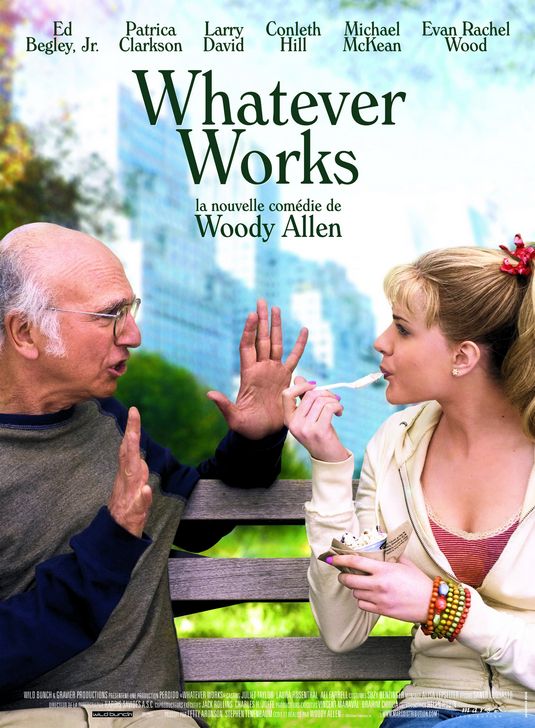
Whatever Works


I'm not a Woody Allen fan, but I had to see one of his latest films, Whatever Works, since it features the extremely talented comedian Larry David. Being a Larry David fan, I had to see it. He isn't one to star in movies--let alone his own television show--so I knew this one had to be pretty good.

When David interviewed on Conan O'Brien's show to promote the film, he talked about how horrible he is as an actor. He's really not that bad. He said when Allen first asked him to do it, he refused. "I'll ruin your movie" was his reaction. I wouldn't say he ruined it at all. It seemed more like the role was written for him. I don't think we'll see David in more films, but this role was made just for him. He was Boris Yelnikoff.

Whatever Works is different from other comedies I've seen. The writing was very intelligent and well written. I'll give Allen that. The actors did a great job of delivering very clever one-liners and longer monologues.

The film stars Larry David as Boris Yelnikoff, an extremely intelligent man who almost wins A Nobel Prize. He used to be a professor teaching music and chess, but he stops doing that after a revelation. He divorces his wife and lives alone in the city where he teaches young boys to play chess; although he is very abrasive and rude to these boys.

Boris is so brutally honest that it's funny. He makes stunning observations about his surrounding world and will announce them even if it will offend the person listening. He will be honest about the kids he is teaching, right to their parents. He will make straight-forward comments to the people concerning them. He doesn't care. He does "whatever works." That's his new philosophy on life.

One day, he meets a girl on his doorstep, Melodie, who has traveled from the south to live in New York City, her land of dreams. Boris is reluctant to let her stay there, but she ends up crashing there for a long time. She isn't very smart in the least, but he is fascinated by her. One night when she returns home drunk, they decide to marry, even though they are VERY far apart in age.


A year later, Melodie's mother finds her in NYC and stays with them. She is distraught with the marriage and vows to herself to break it up and find her someone more suitable. She succeeds--she introduces Melodie to Randy whom she soon has an affair with. They separate. Boris's friends, and even Melodie's mom, start to pair off.

Like in the beginning, Boris tries to commit suicide. Boris failed the first time because he landed on an awning. This time, he lands on a woman, Helena, who he then ends up with. He does "whatever works."

This movie was different because Boris directly spoke to the audience, which isn't normally done in films. It's like when Ferris Bueller would do it, except much more in depth. You'll see it more in plays, but not necessarily in movies.

In the beginning of the film, it opens up with Boris, in present day, chatting with his friends. He mentions an audience watching him and how they're probably eating their popcorn with their overpriced tickets (alluding to the theatre experience). Obviously, his friends are skeptical. He then walks down the street, addressing the camera, to tell us his life story.

David goes on a solid five+ minute monologue where he discloses his thoughts on life and of his past. It's absolutely incredible. The whole time I kept thinking, "How did David memorize all of this?" It really is a brilliant monlogue. It seems longer than a normal play or movie would have one. But, the fact that Boris is aware of us as an audience proves how intelligent he is. He will even speak to us even though others thinks he's crazy. He just does whatever works for him.

Overall, a great story, great plot, great acting, great writing. I was impressed. It's very different from anything you'll ever see. And if you like Larry David, this is a must see. He stays in his character (from other roles) which is what we all love.

What do you think of Whatever Works?

Saturday, November 21, 2009

Firelight


A couple weeks ago, Andy Samberg and the Lonely Island put out a hilarious SNL Digital Short to spoof the Twilight movie series. The hype is so huge right now. Teenage girls and middle-aged women are swooning night and day for the premiere of New Moon, the next movie in the Twilight series. The Digital Short captures it all.

View the video here.

The Short is called "Firelight," obviously a play on words for Twilight. The Short is a trailer that almost exactly mimicks the trailer for the original movie. Instead of Bella Swan swooning for a brooding vampire, Bella swoons for a monster that resembles Frankenstein. The way they script the exact same scenes to fit this new monster is absolutely hilarious.

And what makes it that far off? Vampires. Werewolves. Wizards. Monsters. They're all fictional. They'll all work to hook an audience. Monsters, like Frankenstein, just seem so ridiculous which plays on the whole fictional aspect of it. How are so many people buying into this (like I am myself)? It just highlights the absurdity. But, if you like the series, you'll still get a kick out of it. It doesn't make fun of it TOO much so you're offended.

The New Moon hype really is outrageous, but I think this Short comes at an appropriate time. It proves that Andy still has his flare. He's still creating hilarious Shorts. Taylor Swift looks like an excellent Bella Swan. And for Bill Hader, it's impossible for him NOT to be funny. It all just connects so beautiful comedically, if that's a word.

So what do you think of "Firelight?"

Friday, November 20, 2009

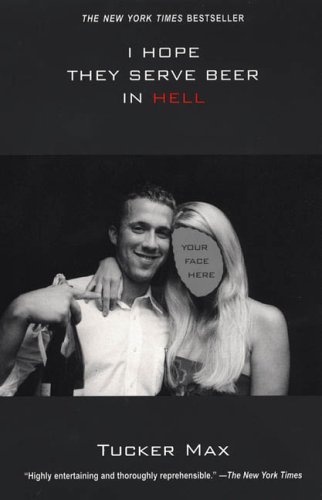
I Hope They Serve Beer in Hell


Many friends suggested I Hope They Serve Beer in Hell to me. Since I generally trust my friends, I picked it up. It sounded pretty interesting since it had to do with outrageous stories about an outrageous life. But, overall, I wasn't as impressed as I thought I'd be.

As I was reading, I couldn't help but wonder how accurate some of the details are since they're so centered around him and his persona that he builds up. The dialogue seemed very scripted, not natural by any means, especially when he's talking. I know it's hard to recreate dialogue because it's hard to get across what was said word for word so long after it's occurred, but this retelling seemed very over-the-top, especially to build up his character, which he is constantly trying to impress us with.

I'm not saying that I doubt that these things happened; I'm sure they did. I just wonder on some of the small details that may be blown out of proportion or maximized for the ultimate effect of telling a good story. I mean, he wants to sell books here and live off of his crude lifestyle. He wants to be a celebrity, anyway.

A lot of times in his stories he would mention, "I'm Tucker Max." Or, "Then I remembered, I'm Tucker Max." It just seems very arrogant to me. As if no one else exists around him. The rules bend for him. Well, I guess it's worked thus far for him.


I also didn't appreciate how he treats women throughout his novel, especially when he gives them nicknames like Fatty. It just turned me off, overall.

The whole thing seemed like a big compilation of bragging. And when I saw what he looked like after I was done reading (since I have the movie cover version), I was very surprised. I pictured him to look very different than what I saw.

Anyway, for those of you who do seem interested in the book (I won't steer you away), it has some crazy tales about being drunk, trying to become a lawyer, crazy hook-ups, building his website, going on his book tour, becoming recognized, losing his pants one night, going to Vegas, going to a strip club in Texas, and about his friends and their uniquenesses.

I'm sure this book would appeal to college students and pretty the majority of men. I don't regret reading it. Maybe I just had a different read of it as a female. My friends have had mixed reviews. Some of my friends had the same reactions that I did; other friends said that they enjoyed the crazy stories. In any event, I wouldn't say not to read it. Make up your mind for yourself. Maybe I'm reading the tone completely wrong. But, that's my take. That's my two cents.

Has anyone seen the movie? I heard it only focuses on one story line. I'll watch it to see how they portray his persona and his crazy stories in one fluid story line. I wonder which story they will select to put into a film...

Does he make his living off of his website? I was surprised to see so many of his stories posted on there. It seems like you could read his whole book on his website without paying him. Seems strange to me.

So what do you think of I Hope They Serve Beer in Hell?

Thursday, November 19, 2009

The Cracker Factory


I don't know what possessed me, but I picked up The Cracker Factory last weekend and finished it in a couple of sittings. The Cracker Factory is a 1977 novel by Joyce Rebeta-Burditt that was turned into a made-for-TV movie in 1979. Years ago, I picked it up at a used book sale, and I decided to read it recently.

The cover of the book stated that it's comparable to One Flew over the Cuckoo's Nest. Perhaps the female version. It does have some similar plot points which would link the two. The Cracker Factory is set in a mental hospital, but it deals with a female narrator.

The protagonist and narrator, Cassie, is a young wife and mother who is unhappy with her life. Her husband is emotionally abusive, so she drinks in order to solve her inner problems. Her drinking and depression spiral out of hand; she drives under the influence with her children and eventually attempts suicide. Cassie lands in the mental hospital where she feels more at home.

Cassie loves this life because she is separated with her husband and she has time to herself. She doesn't have to do all of her chores for her children and husband. So, she wants to draw out as much time as possible to stay there.

Cassie has such an odd relationship with her psychiatrist, Dr. Alexander, who she has some weird crush on. She doesn't want to pursue it, but she is fascinated with this man. He won't let her return home, but Cassie eventually does decide to come home after Christmas once her son is sick.

The novel wasn't all that interesting. It is mostly Cassie's inner thoughts on her depression and drinking, which might be interesting to some. She has random interactions around the mental hospital, dealing with weird patients and doctors. Cassie is seen as the ideal patient since she seems the most together and because she visits AA meetings. She seems to have it the most together.

One weird factor that seemed to just be thrown in there was Cassie's affair. She supposedly had an affair with a man that is never really brought up. She also had another affair with one of her husband's friends. It doesn't really seem characteristic of her, but I guess it shows her unhappiness and how she really isn't cut out for the life of being a committed mother.

But, the ending didn't make sense to me at all. I actually had some problems with buying the ending. Cassie was so unhappy with her husband. She loathed him. She didn't love him. She wanted to live alone nearby to get her act together. That was her plan. But, when she goes home, she lets her husband make love to her. Her son gets sick, and she has a revelation that she wants to stay there and take care of him. She wants to return to her house to be the mother that she never was.

And, tie in some resentment from the angry mother who thought she was lazy and doing this on purpose. Weird characters are weaved in throughout.

Ahem. What a whim! How could that knock sense into her?? Give it two months and she'll be right back to where she was--drinking and landing in the hospital. I just didn't buy it. It seemed like it needed a sequel because she'd go right back. There wasn't any change or growth. What was the point of the novel then? It ends like it starts! Nothing was really accomplished!

After all of that, the ending was a total downer to me.

But, I researched that this book was turned into a movie two years after it came out. I didn't realize it was this popular. Has anyone else read it?

That's my refelction. I would only recommend it if you like internal narratives, mental disorders, depression, addiction, and/or adultery. So-so. Just wanted some feedback I guess.

So what do you think of The Cracker Factory?

Monday, November 16, 2009

The Gingerbread Girl


I keep reading obscure Stephen King novels. I just picked up The Gingerbread Girl, a very short novel; perhaps it can be considered a novella. King continues to fascinate me with everything I read of his. Short story, film, or novel, he really is a talented writer. I can't believe he has created so many interesting stories.

Apparently, as I just researched, this story was first published in Esquire magazine. I can see how it could be so short to publish. It is REALLY interesting. I'd be hooked to read it in a magazine.

The Gingerbread Girl is about a woman who loses her child from SIDS (Sudden Infant Death Syndrome). She is absolutely distraught, and her and her husband get a divorce because they can't face the past or the present. The woman, Emily, decides to get away to her father's little vacation house in Florida to escape the death and divorce.

However, Emily stumbles upon a murder victim, a woman, in the house of a creepy man known as Pickering. Now she is the target of this murderer. He ties her up, tortures her a little, and then decides if he will kill her or not. Emily discloses that only the boat man knows where she is, so Pickering sets off to kill this man. Once he is gone, Emily does everything she can to break free from the chair she is duct-taped to.

Once Pickering returns, they have an all-out brawl to the death. They wrestle, stab each other, bite each other, wound each other with kitchen objects, run up the stairs, jump out of windows, chase down the beach, and eventually run into a Hispanic man who barely speaks English. Emily thought she was saved until Pickering tried to talk him into her being "loco." Pickering eventually kills this man.


Emily then runs into the water, in her last attempt to survive, luring him in. Pickering can't swim though. This is his demise. Even though he tried to kill her over and over again, he still screamed for help. Odd. Why the hell would she save him?

Emily's obsession with running was persistent throughout the novel/story, and it came in handy throughout the book. It contributed to her survival.

I think it's an interesting title, as she did have to "run, run as fast as [she could]." It was her savior. And hopefully this new encounter will help her value her life instead of dwelling on the negative.

This novel/story is said to be an allusion to "The Gingerbread Man" story. I don't actually know what the story is; I only know the song. I wonder if that would shed more light on this piece.

King does a fabulous job of invoking emotions in the reader. He makes me cringe and visualize in ways that other authors can't. He's so talented. I am so envious of his glorious gift!

Last interesting piece of information: Pickering appears as a minor antagonist in the novel Insomnia. Hm.

So what do you think of The Ginerbread Girl?

Sunday, November 15, 2009

Hope's Boy


Memoirs always catch my eye. I had to read one called Hope's Boy when I saw it on the shelf. And, I haven't read anything like this book before. Hope's Boy is a memoir by Andrew Bridge about his experience in foster care. I haven't had much exposure to the foster care system, and it was very interesting to read about a personal experience of a person who went through the system and grew from the experience.

The back of the book made it sound like his foster care experience was going to be a lot more traumatizing than it actually was. Given, I can't even imagine how difficult it is to be separated from both parents during elementary school. I can't imgaine going to live in a house where kids come in and out of there like a grocery store on a Sunday afternoon. I can't imagine having pseudo-parents who don't really care for you like real parents. Instead of mom and dad you have Mr. and Mrs. Leonard.

I thought Bridge was going to expose how horrible the living conditions were, how atrocious the boy's home was that he lived in for a very brief amount of time. The pain and trauma really came in his own emotional experience, not feeling like he was loved and not having a real "family." He always felt like "just a foster child" instead of being "Andy," a real, loved person.

The beginning and end of the book take place in present day where Bridge has grown up and pursued a career helping out boys that were in his same situation, in foster care without parents. He first explains his career and helping out a boy who needs love, like he did. He also closes the book with his final conversation with this young boy. It's a nice wrap-around to see that even though he went through this pain, as many still are today, he's actually doing something about it. Maybe that's what gives him closure.

Hope's Boy goes through many phases of Bridge's troubled childhood. His first recollections are living with his grandmother in Chicago, wondering why his mother didn't live with him. She eventually calls for him to come live with her in Hollywood where they live a rocky two years together. His mother, Hope, is a flashy woman who smokes a lot of cigarettes and draws a lot of male attention. She lives in a shabby apartment and is very young to have a son. She doesn't seem to understand how to be a mother since it is just thrust upon her so forcefully.

She has abusive boyfriends, neglects him at times (sometimes unknowingly), wakes him up for midnight adventures (at one point robbing a house for money), but seems to really try and care. There's even an incident where Andy needs her to make a bunny costume for him at school and she ingores it until the last minute when she buys a very out-of-place suit that makes him feel both embarassed and proud.


Eventually, Hope strarts to lose her mind. She has visions that people are going to take Andy away from her. She stops working, so the landlord is constantly threatening to evict them. Hope eventually really loses it and is brought to a mental hospital, in which Andy begins his string of boy's homes and foster care. Hope continues to visit Andy for a few years until she escapes down to Arizona for a while where she is again thrown into a different mental hospital.

Meanwhile, Andy endures living with the Lenoards who take in many, many children who are characterized during his childhood. The most heart-breaking one was a boy named Jason who desperately wanted to become a part of the Leonard's family. He begged and pleaded with them. He eventually ran away to test if they would come looking for them, which they only did for a short while without success. Jason was then transported to the next home because of his run-away attempt.

The Leonards didn't seem to be abusive. They didn't really give out love, but at least they took care of him for all of these years. Andy ended up living there until college, which I wasn't expecting. That was kind of them. Mrs. Leonard's character was quite strange too; she grew up during the Holocaust where she was actually in a concentration camp. She wanted to take in children who knew pain and suffering like she had since her children were very spoiled. I thought that angle was really interesting.

After years of not seeing his mother, Andy seeks her out before he sets off for college on the west coast. In his path, many people didn't think he could go to college. They wanted him to go to community college because it would be easier. The main point was that no one really had expectations for him. But Andy wanted to prove them all wrong.

Andy shows one last experience with his mother where she still seems to care but she really is just gone inside. It's sad, but at least he got to understand at an age where it might be easier to make sense of the past.

If the topic of foster care interests you, it's a good read. It wasn't too depressing to bring down your mood. It was more informative and interesting, I found. He writes clearly and evokes certain emotions. It seemed therapeutic for him, which I like to read about through the lines.

I think his mother's name, Hope, says a lot too.

So what do you think of Hope's Boy?

Saturday, November 14, 2009

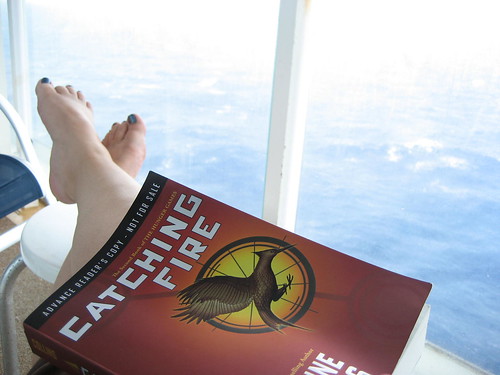
Catching Fire


Reading The Hunger Games, the first of the Hunger Games series, I was hooked into reading the next book, Catching Fire. When I started reading the book, I didn't know it was going to start a long series that Collins would hope to become the next Twilight. It's certainly not the next Twilight, but it still is gaining a lot of teenage readers.

I thought the concept of the series was really unique. I think it's an interesting way to look at a post-apocolyptic world. Total government control. Extreme poverty. Overworking. Starvation. Human beings as entertainment (especially toying with their lives). Sounds like reality TV, eh?

The first book did a great job at hooking me in. The last line of the first book basically set up the next book. It was a cliffhanger to leave the reader hanging. And what did I do? I bought the next book just like others who read the first book like me.

If you have not read Catching Fire, you might not want to read everything below this line.

We all knew the second book was going to be about the tour. But the book was set up in different "books" or sections which took the plotline in different directions. We start off with the tour where Katniss keeps trying to fool others that she is in love with Peeta. They try to prove to the Capital (and to the people) that they are going to get married, and eventually Peeta even drops that Katniss is pregnant, even though she is not.

I won't lie that I get very bored with Katniss's act to fool everyone. Her internal narrative definietly bores me at times. She says the same things over and over and worries about the most predictable plot details. If I heard her say that she had to save Peeta in the arena one more time, I was going to scream!!

At the beginning of the book, Katniss parades around with her mockingjay which ends up being a sign for revolt. Katniss, unknowingly, makes a comment about her dead lost friend to their district, Rue, and the district revolts. Different districts start revolting, and Katniss is their unofficial leader.

Almost as a way to get rid of them, the president sends all (I should say most) of the winners from previous Hunger Games into the arena. This is his way to kill off Peeta and/or Katniss. Especially since they are young and fresh, they might get killed off by more talented, wisened, skilled hunters from previous years who have had more practice and studying.


I thought sending them back into the arena was a bit lame. I thought we were getting away from the Hunger Games in this book. I thought maybe they'd send in Gale (Katniss's real love??) to piss off Katniss. They definitely drew out their love affair. I get so frustrated with Katniss's thoughts as she torn between these two men. I'm having a very hard time liking this narrator as she frustrates me more than makes me want to keep reading. I want to read more to get to the end than to enjoy her telling of the story.

The last third of the book transfers to the Hunger Games where Peeta and Katniss team up with older, stronger winners from previous years. Katniss's main focus this year is to keep Peeta alive (as aforementioned), but more unexpected turns come in the arena. They insert a force field, introduce new animals, and use new weapons. Katniss's team tries to rig up an explosion which eventually triggers her group's rescue from the Hunger Games.

Katniss wakes up in a hospital where she will now assist her friends in revolting against the government, hence book three. And just like the first one, Collins leaves us with something to think about until the next book comes out: Katniss kept eluding to a District 12 where they could escape. But, at the end, she reveals that there is no District 12. Yikes! Then what was it? Where will they go now? How will they revolt? Will they succeed? (Probably)

I think it is a good read for young adults; I think I'm just having trouble reading it as an adult. It may be a little violent, but it's not anything too much worse from what's on television. And it is thought provoking. It could draw up some really interesting coversations too.

I do get a little tired of the simplicity of the reading. Maybe I'm used to more in depth reading. I just think Collins tells us more than she shows us. I want to analyze and interpret on my own. She tells too many things and repeats too many things. Maybe it's because it's a young adult novel. Teenagers like to be told information. They don't always like to 'figure it out for themselves.' Well, then they'd like this book. It says it all for them!

Does anyone know how many books there are going to be in all? Has it been announced? Does anyone know the next title?

Maybe I'm being too critical of this book. I really liked the first book and was completely hooked. I just felt a little bored with this one. It was too repetitive like the first one, too many similarities. And this time, unlike the first, the narrator bothered me. Hopefully the third book will impress me more. I will buy it. I will read it. I will recommend it. I just can't admit that I really enjoyed it. Have others enjoyed it?

What do you think of Catching Fire?

Thursday, October 22, 2009

Unraveled


I didn't expect to like this book as much as I did, but I really connected with it in the end. I picked it up because it's a memoir, my favorite genre. Unraveled: The True Story of a Woman Who Dared to Become a Different Kind of Mother was very touching. Maria Housden, the author, wrote a fabulous book that has stayed with me days after I've completed it.

Unraveled takes the reader through a journey of Housden's untraditional style of being a mother. I didn't really know what to expect, with that subtitle, but it makes sense after reading it. Housden takes us through her experiences of motherhood, jumping back and forth through time, to show us her unconventional ways.

Perhaps the largest part that sticks with me is Housden's explanation of her three-year-old daughter Hannah's death from cancer. In that span of time, she had to walk her husband, her older son, her sick daughter, and herself through the experience. Right before Hannah passed, Housden became pregnant and had a child. Thankfully, Hannah was able to see her baby sister's birth and meet her for a little while.

Housden completed her first book on the life and death of her daughter called Hannah's Gift, which is also explained in the novel.

I couldn't imgaine losing a child one month and giving birth to and raising another child the next. I can't imagine the loss I would feel, especially while trying to give love to another. That's a very hard, unique position to be in. It is definitely worth writing and reading about.

But, Housden also tells the reader about being "a different kind of mother." She struggles with her husband, Claude, and eventually decides to separate from him. He tried to mold her into someone she wasn't and asked her to do things she didn't want to do. Housden eventually divorces him but is faced with a hard decision. Does she take custody of the kids or let him have custody and live in their house?


Before the divorce, Housden went on a weekend retreat to clear her mind after Hannah's death to do some writing. On this retreat, Housden met the love of her life. She never thought she'd be one to have an affair, but she went with her internal instinct to be with him, Roger Housden, a writer. The way Housden describes meeting him was absolutely uncanny. She says that, once they locked eyes on each other, they knew that they were meant for each other.

Years later, Housden divorced her husband and moved in with Roger on the west coast in California. She let Claude take custody of her children in New Jersey and spent weekends and holidays with the children. Housden describes the pain of living away from her children, especially when major traumatic events happened like 9/11 and other injuries. Housden just wanted to pursue her writing career and explore her life more, especially with her new boyfriend.

After struggling with the distance, Housden and Roger moved back to the east coast to be closer to her children. They both ended up getting their own primary places in New York, one in New York City and the other a bit farther apart, where they now live and try to make more contact with her children. Claude still has problems letting her back into their lives even though he also had an affair and pursued a new love interest. It's all very strange.

But, the memoir was still extremely interesting. I was hooked. I know a book is really good when I can't stop thinking about it, and I can't stop thinking about this one! She always wanted to be a writer, and now I see why. She's talented, and she communicates her message quite effectively. I now want to read her other book! She's pretty good!

So what do you think of Unraveled?