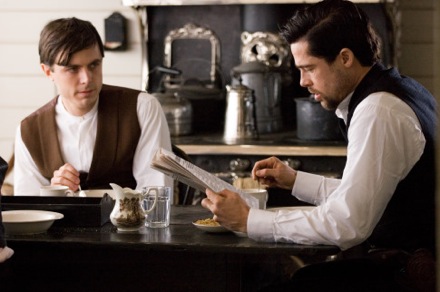
Thursday, August 13, 2009

Arsenic and Old Lace


For the new school I'll be teaching at, I have a few options of what play to teach. Arsenic and Old Lace by Joseph Kesselring is one of those options. In this space, I will explore the play and its many dynamics.

I don't know if many people are familiar with the play since it was written in 1939 and was most popular during the 1940s and during a brief stint in the 80s, from 86 to 87, when it was performed in New York City. Otherwise, you would just have to be a studying actor, drama student, or lover of literature to have crossed the path of this play. I hadn't heard of it otherwise before now.

Arsenic and Old Lace is a farcical black comedy that has many different story angles all tied into one. I find I might teach this one over Inherit the Wind and You Can't Take It with You since my audience is a sea of twelve year olds. This play is bizarre and off-the-wall, and I think that would be more appealing to them. Especially since my other competetors have to do with a trial about evolution and a family comedy.

The main plot has to do with two elderly ladies, the aunts, who live in Brooklyn and are well off. They take it upon themselves to poison old men who come looking for a room because it is their "charity work" to put them out of their misery. They then get their nephew, Teddy (who thinks he is Teddy Roosevelt), to dig their graves in the basement. He thinks they are yellow fever victims and that he is digging the Panama Canal downstairs.

These old ladies, Martha and Abby, have a newphew who is the star of the play, Mortimer Brewster who is a drama critic. He writes nasty reviews of plays, so since he has earned a reputation of being a bachelor and hating love, he tries to put off and/or hide his marriage proposal to Elaine. Throughout the play, Elaine tries to get him to commit to marriage, and once he does, he discovers the deaths of the men in the house and tries to get her to leave him as much as possible in order to rid her of the insanity.

Later on in the play, Teddy and Mortimer's long-lost brother returns. His name is Jonathan and he brings with him a Dr. Einstein who is a plastic surgeon. He has reconstructed Jonathan's face since he has committed so many crimes and murders. When Jonathan returns, they don't recognize him, but he convinces them otherwise. He is offered to stay the night, and when Mortimer comes home, he tries to dispute this. Jonathan secretly wants to run a plastic surgery operation in the basement and live there forever, and no one else likes this idea except for him and his doctor, who he controls mercilessly.


Meanwhile, Teddy runs around the house screaming "CHARGE!" or giving and receiving commands from others as the President. Cops come from time to time, and they are depicted as absolute fools, and they seem to have no idea what's going on.

At one point, Jonathan decides to murder Mortimer because he is getting in the way of their plans. Jonathan has also murdered someone and is going to bury him in the hole dug for the recent murder of the old ladies. Mortimer tries to use this as collateral to get them out, but they won't since they know of the other murders. They even try to take Elaine away before Mortimer interrupts them. So, Jonathan ties up Mortimer, in a scene of pure irony as he describes the play he went to that night of the same plotline, and they attempt to kill him before they are interrupted by a police officer, O'Hara. O'Hara thinks they are reenacting the play from the night, and he spends hours telling them about the plotline until they all fall asleep.

The third act resumes later in the morning when O'Hara has finished his story. Mortimer has already signed paperwork for Teddy to go to Happy Dale, a mental institution, so that he can be safely away from the murders. The cops burst in and recognize that Jonathan is a wanted felon, and they take him away. Before they do, Jonathan bursts out their secret of the dead bodies, and they think he's joking. A man comes to take Teddy away to Happy Dale, and the old ladies freak out about it. They want to come too, so they talk about the murders in the basement. Thinking they're crazy--not honest--they submit them to Happy Dale too. Mortimer and Elaine are left to be wed.

Now, this plot is supposedly based on actual accounts where an old lady did poison old men, except she did this to gain their pensions. This play was originally supposed to be a drama, except a friend of Kesselring convinced him that it would be much more interesting and successful as a comedy. And so, it was.

There are many controversial topics that are brought up during the play that are poked fun at, farce: plastic surgery, murder, dumb cops, the mentally insane, bachelorhood and marriage. There is a lot to talk about, but it's a bit scattered so I could see difficulties in sustaining a coherent discussion. I'll find my ways.

I'm thinking of focusing on farce and having students create their own one-act farcical black comedy to perform in front of the class, in groups. We would focus on identifying and defining farce, and then they would demonstrate their understanding of plot, drama, and farce in their short, very short, play. That's what is running through my mind right now. Please add any other ideas of how to tackle this play with students, besides acting it out and showing the classic old film of course.

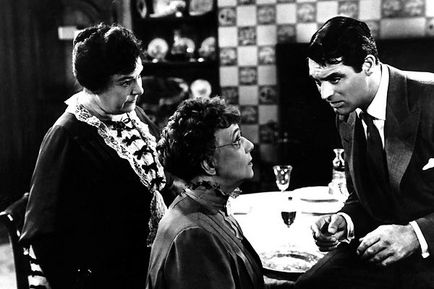
I also watched the film adaptation yesterday which was relatively close to the plotline of the drama. Some areas were skewed or different, such as Mortimer wedding Elaine in the first scene. But, I think it gives a good depiction of what happens, when it might be confusing to a beginning reader, and it helps make sense of the random plot details throughout. The characters seem to be right-on to their depiction in the play. It would be worthwhile to watch.

So what do you think of Arsenic and Old Lace?

Wednesday, August 12, 2009

White Lies for Dark Times


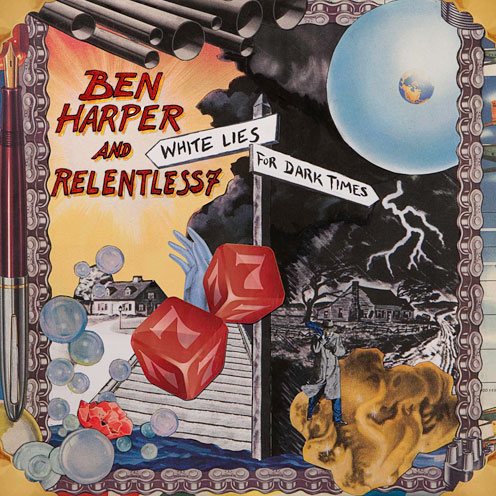
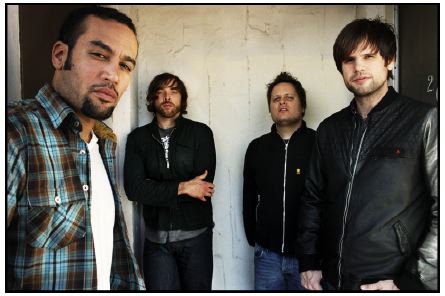
Ben Harper's music can provoke so much emotion in me, sometimes more than others of my favorite groups. There is just something so raw to his music--I am drawn to all of his albums with all of the different groups he expirements with. His newest album, White Lies for Dark Times, is his first album with the Relentless7, a musical group from Texas. So far, I'm really connecting with the album this summer.

What I like about Ben Harper is that he continues to change, musically, and expirement with different artists and groups. Harper has made albums with the Blind Boys of Alabama, Jack Johnson, Tom Freund, the Innocent Criminals, and the Relentless7. I like that he mixes it up with different groups; it keeps his sound fresh and it keeps him changing and growing as a musician. It's quite clever.

I feel like Ben Harper is a highly unrecognized musician. He has ten incredible albums that all have different sounds. They all contain different messages and have different themes that are strung throughout them. Harper varies between harder songs and slower songs, showing his capability and flexibility as a musician. Personally, I connect more with his faster-paced songs more than his slower songs, but the slower songs speak to me every once in a while. He really can capture melancholy well--just look at his slower side on Life from Mars, especially with "Another Lonely Day."

If you really want to challenge me on Harper's talent or want to hear it for yourself, I would listen to his live album, Live from Mars. I was BLOWN AWAY when I first heard it. It's a double-disc album where he plays with the Innocent Criminals. The first disc is a bit harder sounding where Harper plays his slide guitar. It sounds absolutely INCREDIBLE. The second album is an acoustic set with slower songs. For whatever mood you're in and whatever music you're into, one of those discs should appeal to you.


Back to White Lies for Dark Times. This album is definitely Ben Harper, but it does sound differently from his different albums. It's a little harder, which I like, and the emphasis isn't always on him and his slide guitar. A lot of the songs are highly driven by the drums, which sound incredible. There is also a back-up vocalist that works really well, especially on "Shimmer & Shine." I was very impressed when I heard this album, and now I'm hooked on it.

The two singles on the album are very good. One is faster; one is slower. The more popular of the two is the aforementioned track "Shimmer & Shine" which sounds like another staple song of Harper's--no surprises. It's everything a Ben Harper fan would expect.

The other single is a bit slower called "Fly One Time." I saw him perform this on The Tonight Show with Conan O'Brien. I was surprised he picked to play this one since it's a little slower, but the song is heavily reliant on his vocals, which he impressed me with. He really has to sing and go from high to low notes, and it was the first time I ever really stopped and thought, "Man, this guy can sing." It has a catchy beat to it too. It's not too slow either; it's just not anything like some of his other faster songs. It takes it down a notch but doesn't put you to sleep.

Some of the songs have a really southern feel to them, like the opener "Number with No Name" or "Why Must You Always Dress in Black." This must be Harper's influence from his new band, but it mixes up the sounds on the album.

Other tracks are slower and have more emphasis on melody and lyrics. Such songs incldue "The Word Suicide" (where Harper announces that love is a lonely room), "Faithfully Remain," and "Skin Thin," which is a little too slow for me. "The Word Suicide" has some gorgeous lyrics. Check them out below:


The word suicide is irresponsible
Still you offered to buy me a gun
What's so hard about sympathy
Love is a lonely room

When out on the edge
There's just two directions
And somebody has to lose
I should know better than to use words
Like never and hate
Love is a lonely room

This is no way to live
And this is no way to die
Who in the hell's life is this
I'm living anyway
Love is a lonely room

Other songs on the album are just catchy and funky. These are my favorite songs here because they're just so different and lively. They're not anything like other songs he makes, and they're hard to put into words. "Keep It Together (So I Can Fall Apart)" has such a cool introductory guitar riff that continues throughout the song. This one is one of my favorites for that reason. I can jam on this one. If you want a little faster-paced, "Boots Like These" follows, and it's got background drums and a hypnotizing guitar that will make you want to dance, and play the song a couple more times. "Tonight I'm going to lose my mind..."

Two other funky songs are "Lay There and Hate Me" which sounds like a disco-ish type song, and the other is "Up to You Now" which doesn't sound like a song Harper would normally record. It sounds like some other band's song, but I like it. It's a mix between mellow and upbeat. He sings with a lot of feeling in this one. They're both interesting tracks to say the least.

For Ben Harper fans, I don't need to sell this album. It sells itself. For others who aren't into Ben Harper, I would definitely recommend this album. If you're trying to get into Ben Harper, I might not start with this one (I might start with Fight for Your Mind), but this one would do too.

The title White Lies for Dark Times is quite appropriate to match the social, cultural, and economic times of this country. The mood and lyrics of his songs also match quite well. Overall, I think Harper does a phenomenal job with this new album and this new band. I am never disappointed at what he has to offer. He is always changing, growing, and creating, and I respect that. I love this Ben Harper guy. He's just so good. And that's all there is to it.

What do you think of Ben Harper or White Lies for Dark Times?

Tuesday, August 11, 2009

The Killing of John Lennon


I don't know what drew me in to see this movie, but I had to see the independent film The Killing of John Lennon. I had neve heard of it before, but the topic interested me since I didn't know too much about John Lennon's murder. I only knew the basics: John Lennon was killed outside of his apartment in New York City while walking into his building with his wife, Yoko Ono, and was shot in the back by a fan who then sat down and read The Catcher in the Rye.

The creepiness and eeriness of the situation made me want to see the killer's motivations and especially his connection with the popular JD Salinger novel. The Killing of John Lennon did a great job of having the audience understand his motivations. At times it was a bit slow as the viewer was sitting on the edge of his/her seat wondering when it was going to happen. He had mentioned killing Lennon to those around him, so why hadn't anyone spoken up earlier? And, he ran into all of those people outside of his building who he showed an unreal fascination with him. Why didn't they report it and/or keep a closer eye on this guy for Lennon's sake?

From watching the film, I gained a deeper persepctive on his motives. For instance, Lennon's killer, Mark Chapman, was a fan of the Beatles when he was young. He did enjoy Lennon as a musician. However, he was deeply troubled when Lennon made his infamous remark, "We are more popular than Jesus." He thought it was blasphemy, and this started his hatred. Then he stumbled across The Catcher in the Rye, and his life changed. He realized that he was Holden Calufield, and that everything in the book was speaking to him. It answered all of his life's questions. But now he had to preach the book's central message and almost act as a hero like Caulfield himself.

Caulfield argued against phoniness, something that he thought Lennon had more than any other human being he knew. He sang about having no possessions and imagining love and peace in his song "Imagine" while he had millions of dollars and multiple homes. In his new album with Yoko Ono, he stressed his disinterest and shunning of the Beatles and Jesus. Chapman found Lennon to be a phony, so he wanted to end it for everyone so they could all see how much of a phony he is.


So, Chapman packed up his things where he lived in Hawaii and stayed at multiple hotels in New York City as he waited and stalked Lennon. He stayed at the Waldorf-Astoria and the Sheraton, trying to stay at hotels similar to those of Caulfield. He even had a prostitute come to the room, like Caulfield, and he mimicked the same scene from the book where he gives her the night off just to be in the company of a woman. The next day, Chapman met up with Lennon in front of his apartment where he had Lennon sign an autograph. Chapman waited for him to return to his hotel where he then called out his name and then shot him in the back four times.

For whatever reason, I've been watching many films where people cowardously shoot people in the back. I've watched The Assassination of Jesse James by the Coward Robert Ford, Public Enemies, and now The Killing of John Lennon, which are all based on actual accounts. Great, popular, famous men are taken down by weaker men who shoot them in the back when they don't even know it's coming. They are hunted and stalked and then are assassinated against their knowledge. I think it's just sick, but it's also really strange that I've seen all these movies with similar themes in just a matter of weeks.

However, Chapman almost didn't commit the murder. He went to New York City once, announcing to a cab driver that something big was going to happen and he would see him soon in the news. But before he could find Lennon, he saw Ordinary People and was inspired not to murder and to return home to his wife. Weeks later, Chapman was back on the plane and stalking Lennon at this apartment at the Dakota.

Once he was imprisoned, Chapman later said that if he hadn't gotten ahold of Lennon, he was then going to go after Johnny Carson or another famous person who I really can't remember at the moment. He then discussed his motivations and connection with the novel. He even read aloud the passage from The Catcher in the Rye where Caulfield says that all he wants to do it catch little children as they try to jump off of a cliff. That's all Chapman wants to do too. He then sent out a statement saying that if people want to understand why he did what he did, they should read The Catcher in the Rye. I'm not sure how many actually did this, especially with the brewing hate they must have harbored for him.


What really gets me about this is the memorialization of Mark Chapman. By making this film and focusing on him, they are bringing him fame and attention, which is what he wants. This seems to be more glorifying what he did more than it is glorifying Lennon himself. I know it is trying to help us understand why it happened, but the artistic way that the film portrayed Chapman made me feel like they were on his side. They understood why he did it, and that was acceptable. That feeling is not one that I like.

And what really got me was that SO MANY other texts have come out about this murder, which glorfies and memorializes the account even farther! Before this film, another film came out starring Jared Leto as Chapman called 27 Chapters. Other interviews, books, and articles have come out on the account. This is exactly what Chapman wants. He will now be forever remembered for his heinous act.

What kills me too is that this type of glorification tells other sociopaths that, if they want to be remembered forever and known as a murdering legend, they can murder and then they will live on forever. Movies will be made, books will be written, articles will come out--they will be the hot new thing in the media, even if it is in a negative light. It is still attention even though it's negative. We are just feeding into this cycle, so if these murders keep happening, I wouldn't be surprised. We're reacting in a way that encourages their behavior, and that disgusts me.

Glad I got that off my chest. I wonder if anyone else agrees with me on that point, because I asked a friend of mine, and she said, "Well, then why did you watch it? They made that movie for people like you who were interested in it. You can't complain then." And I see her point too, but after the fact, I realized what I was getting myslef into and what the greater point really is. Man, what a tragedy.

It's weird to think that it's been over twenty years since the murder in December of 1980. I wasn't even born yet when it happened. Chapman was sentenced to twenty years to life and has since been denied parole four times. I'm not surprised. I wouldn't be surprised if he died in prison. He's a nut. Why would they let him out?

The movie seemed to do a good job with keeping all of the facts in line. Wikipedia only mentions two minor details that didn't mesh up with reality, but they're too miniscule to even note here. The actor did a good job of playing a mental case, and they did a decent job with making him look simialr to Chapman, but he was much better looking than Chapman. They did him a favor with that actor, and with Jared Leto for that matter. It was really artistic, which was enjoyable to watch, and it seemed that the writer and director did a lot of research so it was quite accurate. Overall, if this incident interests you, it's worth the watch.

That's my two cents. So what do you think of The Killing of John Lennon?

Monday, August 10, 2009

Lake Luzerne Camping


Camping is a great way to get away from a busy life or when you feel troubled. I really feel that one can connect with nature and recharge oneself when separated from mainstream society. Last weekend, I went camping with a great group of people, my family, and it was really well needed.

What I love about camping is that you get rid of all the noise that you are normally surrounded with. You don't focus as much on television or the computer--this must drive teenagers crazy--and you have to actually do worthwhile activities like talking, playing games, walking, swimming, or fishing. Actual activities!

Camping made me realize how much I focus most of my life on technology, or other simple things that weren't necessary for a camping trip. I even had to bring a lot of technology with me (music, electric toothbrush, camera, phone); is it possible to eliminate all of it? For me, I need to be slowly weaned down to that point.

I also realized simple things that are necessary to survive just for a small span of time, and I noticed what little things I take for granted. For instance, we need fire for warmth and food. Thus, we need enough wood to get us by for an amount of time. The nights were very cold, and we found ourselves inching closer to the fire for warmth. Imagine not having that when you really needed it. Food needs to be kept cool, with coolers, which needs ice. If you really needed food or water, you would have to hunt for it (which my brother did with a fish), so we didn't have to think too much that route in terms of eating. Walmart worked just fine.

Bathrooms. I take them for granted. Toilet paper, soap, feeling clean. Even walking a far ways, in the dark, to the bathrooms is different. I can see why people wouldn't want to go camping. You really have to step out of your comfort zone and give up luxuries. One luxury that people don't want to give up is a clean bathroom facility. Others don't want to give up a warm, comfortable bed. The hard ground with rocks and tree roots isn't too appealing. I had trouble sleeping because of that, but by the second night, I was fine. But some people don't want to change or give up what they have, even for a short amount of time.

Camping also made me think about what a human does need in one day. Toilet paper. Food. Water. Warmth. Bed. Adequate clothing. Bug repellant. Fire wood. Garbage bags--we produce so much waste! Waste in one day is unbelievable. I can't even imagine how much waste we produce in one day, let alone how much waste we've produced in hundreds of years. Where the hell does it all go?

But, camping is a good way to connect with people and actually have a conversation with someone without being distracted. You can really learn people's true natures, whether they will help assist with setting up, putting down, sharing food, etc. When you eliminate a lot of the "things" and focus on less, you are more able to think and connect with others. It's a really great experience, and Lake Luzerne's campground was phenomenal. We were right near the beach so we had easy access, it was quiet, it wasn't buggy, and it was clean. I was very impressed with their facilities.

Don't blow off camping. I know it's not for everyone, but it's worth it. I try to go at least once a year because it reminds me of what and who I take for granted and sort of pushes me back to reality when I get so lost in it, especially when I'm surrounded by so much technology.

Anyway, I have some pictures below of the trip.


What do you think of camping or Lake Luzurne?

Friday, August 7, 2009

Public Enemies


Movies this summer are absolutely horrible. Normally movies that come out in the summertime are top knotch because people are more apt to go out and spend their money in the nice weather. And it's drive in season. Drive in movies have been horrible this season. They are over-populated with children's animation movies or sub-par romantic comedies that aren't worth the money. They aren't even worth watching when it's free on TV. What has happened to movies this summer?

Despite the horrible circumstances, there was actually one movie that did look appealing, so I was able to satisfy my itch to go to the movies. The only movie I felt okay spending my money on was Johnny Depp's new film Public Enemies. I was surprised at how packed the movie theatre was, but I guess I wasn't in the end once I saw what other films were competing with it.

Public Enemies is about the criminal and ganster John Dillinger and his fellow sidekicks Baby Face Nelson and Pretty Boy Floyd. Dillinger started a massive crime wave in the 30s, right after the Great Depression, by robbing banks and killing men who got in his way. However, the public did like him because he only robbed the banks of their money, not the people. When he robbed a bank, he would let those in the bank keep their money; he would not take that with his loot.

At first, Dillinger looked really good at what he was doing. He seemed smooth and slick; robbing banks looked like an easy stroll through the grocery store on a vacant evening. However, his robbing became more and more difficult once the FBI was formed and a special team went in search of capturing him and his men. This team was led by Melvin Purvis, played by Christian Bale, and they tracked Dillinger and his posse until they caught him. Dillinger had to break out of jail a few times, for they couldn't ever really hold him down.

Dillinger hooks up with a nice little girlfriend who he wants to run away with. He keeps needing to get more and more money in order to safely run away and live off of his money for the rest of his life. His jobs get sloppier, and eventually he is separated from his girlfriend once he is imprisoned. They eventually hold her in police custody to lure Dillinger there, but he is shortly killed afterwards.

The killing of Dillinger is quite famous--he is shot in the back once he exits a movie theatre. He was ratted out by an immigrant friend who disclosed Dillinger's location in exchange for her citizenship into the country. He was killed in public which was witnessed by many, many people. I find it lame that they HAD to kill him, and shoot him in the back for that matter. It's just as bad as the Jesse James killing. Such cowardice to shoot someone in the back.

But then, part of me thinks that the movie helped us side with Dillinger. Wasn't he stealing from those who hardly had anything so he could live a lavish lifestyle? Wasn't he a murderer? (Same with Jesse James for that matter) Are we siding with the criminal? Would we if it took place during our present time? So, am I biased to say that Dillinger and James deserved better deaths, to be taken down in a different way? It's not like they would have learned...

Before I saw the movie, I didn't know the outcome, so I was surprised by the ending. After researching it afterwards, apparently Dillinger, his crew, and his murder are quite historic and recognized. Apparently Dillinger was one of the large criminals in the "public enemy era (1931-1935)" which helped create the FBI to try to put a stop to this kind of criminal activity. At least something got the FBI started.

What shocked me in the movie was how public Dillinger was. Even for being a wanted man, he still kept social and was out in public. He went to movies, to dances, out to dinner, anything. He didn't keep a low profile which I think led to his death. If I was being hunted, I would give up pleasures like going to the movies just so I could stay alive. I would think that someone might recognize me in public and would either turn me in or try to kill me. It seems to me that he felt invincible, like no one could ever take him down. That, my friends, is his fatal flaw.


The movie was very interesting and exciting. Especially if someone likes gangster movies and crime movies, this one is good to watch. They did a great job with making everything appear to be in the 1930s from clothing to speech to scenery. I always think it's really cool to watch a movie in such a different time period. It was also cool to see how much crime has changed and how much, maybe parts of it, have stayed the same. Early crime was fascinating to watch and analyze.

However, as I research the film, I didn't realize how many inaccuracies it has. Most of it is true, but a lot of details do not mesh with what actually happened. Here are some notes that are inaccurate about the film (from Wikipedia):

-Dillinger was not present during the Michigan City jail break.

-Dillinger died before Pretty Boy Floyd, Baby Face Nelson, and his other crew members.

-Purvis did not shoot Floyd or Nelson.

-The hearing with J. Edgar Hoover took place years before it did in the film.

-Hoover declared a war on crime before Dillinger and his men started robbing banks, not because of their crime.

-The Texas "cowboys" came in at the very tail end of the investigation because Purvis was deemed incompetent by Hoover.

-The gang stayed at Little Bohemia for weeks, not one night.

-The Little Bohemia ambush was a major fiasco. In the film, Dillinger's men are all killed, but in reality, no one was killed there.

-Billie, Dillinger's girlfriend, was arrested before Little Bohemia, not after.

-Anna Sage, who turned in Dillinger, did not know Dillinger for as long as depicted in the film. She was also not as nice.

-Dillinger did not go into the police department that was hunting him down. He went into another one.

After watching the movie, I also learned that Purvis kills himself later on after finishing this investigation. Hm... I wonder why...

Despite the inaccuracies, the movie was still pretty good and was entertaining. Depp, as always, did a fabulous job. He was the perfect criminal. He made you fall in love with him even though he was the "bad guy." However, I looked up what Dillinger really looked like, and Depp is much better looking than Dillinger. Dillinger was lucky to have such a suave guy play him in a movie. Check out the two pictures compared below.


So what do you think of Public Enemies?

Thursday, August 6, 2009

The Dead Weather


One of the hottest new bands of the summer (or this year for that matter) is Jack White's new band The Dead Weather. Not only is Jack White in this band, but there are three other members from excellent groups. I guess this is technically called a 'super group', but it beats Taylor Hanson's new super group.

The Dead Weather is comprised of Jack White on drums, Alison Mosshart on vocals from the Kills, Dean Fertita from Queens of the Stone Age on guitar, and Jack Lawrence of the Raconteurs on bass. They have such a different sound that is quite refreshing. It has a southern rock feel, but not the southern rock sound comparable to Lynyrd Skynyrd. It's not like anything I've ever heard, and I like that.

The group formed randomly while jamming together, and then their group sort of sprouted naturally. Within two weeks, the band had laid down eleven tracks which soon became their album Horehound. The album is quite excellent; each song is completely unique and different from the next. Some are slower, some are faster, some have an incredible keyboard sound to them, others are lead heavily by drums--you never know what you're going to get off of this album.

The Dead Weather has a slight feel of Jack White's other groups, The White Stripes and The Raconteurs, but you can tell the different influences on the band. The guitarist also plays this intense keyboard, very much noted in their song "Bone House." On Conan O'Brien's show, they played "Bone House" where the guitarist really jammed out on the keyboard. They really have great chemistry together. I was impressed at how well they played together on that show.

I was blown away by their performance. Jack White is incredible on drums, which shows how incredible of a musician he is. He's been in three different successful bands, when some only get one, if that, and he's played different instruments in all these bands. He is a vocalist, a guitarist, and a drummer. To me, it's extremely impressive. I wouldn't hesitate to say that he is one of the best musicians of this generation. He will be as big as Keith Richards and Mick Jagger. Just watch.

What impresses me as well is how different all of his bands are. If you look at the dynamics between his bands, they all seem to have different motivations and purposes. They are all so very different, and their sounds are all different as well. This is talent. Whatever Jack White touches turns to gold. Whatever White does, I'll be sure to listen to it.


I also enjoy that White doesn't always take the spotlight. In his last two bands, he hasn't been the lead singer. He specializes in making music, not necessarily leading the band. In The Dead Weather, they have Alison as lead singer which adds an awesome sound. White does back-up vocals, like he does in the Raconteurs, and it sounds incredible with Alison's voice.

Their two singles are pretty good. The opening drum work on them really hooks the listener. Their two singles are "Hang You from the Heavens" and "Treat Me Like Your Mother."

"Bone House," as I already mentioned, is really good and unique. It may sound a little crazy at first, but it grows on you.

"Rocking Horse" sounds like it's right out of a Quentin Tarrantino film, specifically on the soundtrack of Pulp Fiction or Kill Bill.

Some songs are slower like "60 Feet Tall," "So Far from Your Weapon," and "No Hassle Night."

"I Cut Like a Buffalo" has such a unique and catchy tune to it, very similar to "Bone House." "3 Birds" is just a funky song.

"New Pony" also has a catchy tune to it, but the vocals are absolutely incredbile. This song gets stuck in my head.

My favorite song on the album must be the last song, "Will There Be Enough Water?" which is completely instrumental. They jam, and they play with some crazy sounds. I almost wish it did have vocals, but the song is so brilliant it doesn't matter. If anything, check out this song. I think this song shows their talent.

The Dead Weather have been touring, and I wonder how they sound live. I'd love to see them. It just sucks that they don't have that many songs. It would be cool if they drew from their other bands as well. Now THAT would be a cool show.

They are a group that got together purely to make music, not for fame or for money. I think that's what hooks me to them. They got together but their jamming turned into something real and raw. They love music, and that is apparent on Horehound.

End point: Jack White is intensely talented, and he has a new group that is worth watching. The Dead Weather. Check them out.

So what do you think of The Dead Weather?

Wednesday, August 5, 2009

Angela's Ashes


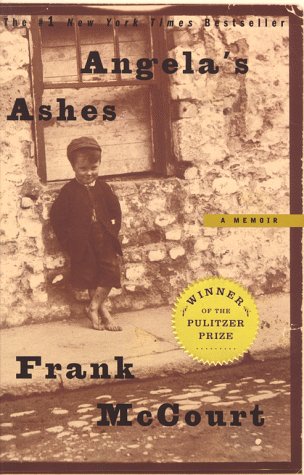
I watched the film Angela's Ashes, an adaptation from Frank McCourt's autobiography, in honor of his life and passing in the past month. I've read the book before, but I've been thinking about him lately, and this was my way to look a little more into his life.

The film and the book actually sync up pretty well. Obviously some parts are omitted from the movie to make it shorter, but other parts in the film were created to represent many smaller incidences in the book. For example, instead of showing Frankie "discovering himself" sexually, they show it in one scene where he does it with a group of boys in the field. In terms of time, I don't think it's a bad idea to do it that way when turning a book into a movie.

One thing I didn't forget about reading the book was how absolutely depressing it is. The plot makes a great story, but it breaks your heart. Within the first half hour of the movie, his baby sister dies, and his two younger twin brothers both die on separate occasions. It wasn't really described in the movie how they died; they just seemed to end up in coffins. Later on, Frank's mother puts up a fit about using second-hand mattresses that might have once held people who died of consumption which alludes to the fact that her babies might have died that way as well.

Death early on must have been really hard for Frank to cope with. How can a child understand that much death? At least there were no more deaths for him until he was a teenager when his grandmother passed (who was kind of mean to him anyway) and when the girl he was fooling around with passed of consumption. What is consumption anyway?

After the passing of Frank's sister, they moved from Brooklyn back to Ireland. They lived on welfare since Frank's father couldn't hold a steady job. He spent all his time and money on booze and would come home very drunk and disturb the children. When they were really short on cash, Frank's father went away to England to work. He promised he would send back money on Saturdays, but he never sent the family anything. He spent all the money on the drink. Thus, Frank's family was near starving, only having tea and bread on most days, if that. They lived in horrible conditions; the floor in their downstairs was constantly flooded from rain and the upstairs walls were basically falling apart. They eventually tear them down for firewood when they are near freezing in wintertime.

In order to help out the family as the oldest child, Frank gets small jobs here and there to help out. Frank can't stand watching his mother beg for leftover food from the churches and loaning money from others in order to help her family survive without their father. When Frank is younger, he helps shovel and deliver coal, but after a few weeks, his eyes turn bloodshot red and he gets chronic conjuctivitis. He then has to quit for that. Later on, he develops typhoid and is hospitalized and misses much school. He then has to prove his intelligence to the school as they want to hold him back.


Frank eventually gets another job as a postboy, sending out the mail. This is how he earns his money to go to America. He knows America and education are his ticket out of Ireland where he might just as well go down the same paths of those around him. This is where he meets the girl he fools around with and watches her pass. Towards the end of the book, he earns enough money to leave, and the movie concludes with Frank sailing towards the Statue of Liberty.

Frank also shows his time in school, a very strict, uptight Roman Catholic school. They severely beat them and punished them. They would chant and focused a lot on God, the Bible, and its teachings. Frank was teased a lot at school for not having proper clothes or shoes. When he gets holes in his boots, Frank's father Malachy takes a bicycle tire, cuts it, and glues it to the bottom of their shoes. This only earns them more ridicule when they get to school. They really only had one proper outfit and shoes in all seasons, which must have been very difficult.

Angela's Ashes also gets into the division between Ireland. Malachy was from the north of Ireland, and Frank's mother Angela was from Limerick in southern Ireland. When Frank's family was in trouble, Angela's family was reluctant to help them at all because of Malachy's background. They even mocked the children who looked like they were from northern Ireland. There was prejudice even between the same country there! It astounds me.

But even though he went through really harsh conditions as a child, it seemed like he took everything with a grain of salt. Somehow, he didn't come out disturbed or troubled. He gave back. He appreciated his life. He taught others. He wrote. It seems that he got past these troubles, maybe even coming to peace with it in his writing, but I'm proud of him for that. From the impressions he gave off to the public, it seemed as if this was just the past, but that must be hard to put troubles like these behind you.

I am not surprised that this book earned McCourt the Pulitzer for Autobiography after its publication. McCourt also published 'Tis and Teacher Man which follow up where Angela's Ashes left off.

I couldn't really find it, but I'm thinking of the title Angela's Ashes. Frank's mother was Angela, but she didn't die during the book. Maybe for her hard work and suffering, the book is dedicated to her. The children survived because of her. But why ashes? There is no death of her...

The movie, I think, did a great job of conveying Ireland and Frank's struggles. The actors they chose for the characters seemed to be right on. Overall, the book and the film were very well done. I know they teach this book at a local school, and I can see why. It's definitely worth the time.

What do you think of Angela's Ashes?

Tuesday, August 4, 2009

Inside Inside


Being a huge fan of Inside the Actor's Studio, I knew that James Lipton's new book, Inside Inside, would really appeal to me. I saw him on Late Night with Conan O'Brien when he was promoting his book, and it hooked me once he spoke about its inner contents. Needless to say, it was a long read, but it was still enjoyable.

Inside Inside, what I thought it would be all about, is not ALL about Inside the Actor's Studio. The first half of the book is really an autobiography of Lipton's life. He goes through very fine details about his past, which are very sharp and, at times, over-detailed.

Lipton goes through his early life, being raised by a single working mother in Detroit after being abandoned by his father, a beat poet who married another young artist. Litpon searched for approving his father his entire life which led him to a similar career in writing and show business. Lipton and his father were reunited later on in life, shortly before his death, where he finally got approval from his father for his talents. On Inside the Actor's Studio, Lipton always looks for common threads between actors and their crafts, and many of them have the same theme that Litpon had: the absent parent. He can relate and does bring it up whenever it comes up with his guests.

Other details of Litpon's life surprised me: he was a writer, a poet, an actor, a soap opera star, a writer of Broadway musicals, and a producer of such television specials such as President Carter's Inauguration and Bob Hope's birthday specials. He really has lived a rich life and has known many important and influential people that must make his life extremely flavorful. What a lucky guy.

Let's not forget Lipton's brief stint in Paris where he was a French pimp. He worked as a pimp when prostitution in France was quite a respectable business. The women got checked out every month and were a lot classier than they are today. They actually had decent reputations and were working to earn money for something higher--a business, school, a family. Lipton would translate for the women, since many of the men coming to the brothel-like atmosphere were American. He would be in the room and translate, and then he would earn a bit of the money. Never knew that part of his life, eh?

Lipton eventually met his wife in 1970, Kedaki, most famously known for her role as Miss Scarlet in Clue. Throughout the book, it is apparent that Lipton is completely in love with her. She is always referenced, and she has a hold over him, not letting him have tattoos and such. She is always with him, and they always seem to make decisions together. Lipton portrays their life as very happy, and it's nice to see him in a good relationship like that. Kedaki seems to be at his shows as well, which must be a nice life for her. The two of them also accompany the guest to dinner after the show which is a brilliant ending of a night! They've got a sweet gig going on there.

Later on, Lipton eventually helps found the Actor's Studio Drama School by merging the Actor's Studio with New School University in New York City. He helped create a three-year MFA program for actors that was built on the Actor's Studio's main principles. Someone who wanted to get in would have to try out, and selection into the school was quite difficult. In order to keep the Studio exclusive, only those who meet certain criteria can be allowed in. The program is for actors, writers, and directors, and they all work together to understand everyone's part of the creative process, which I find to be quite smart.


This is where Inside the Actor's Studio was born. Lipton created his project under the school, a non-credit course where students focus on craft. Lipton would invite famous actors to the school and interview them, as a means to help educate soon-to-be actors, writers, and producers. Lipton got Bravo to sign on, and the show became popular pretty early on. In the beginning, Bravo wanted to change the show a bit, so they hired some people to put in their input on the show. The outcome was that people didn't want a lengthy interview; they wanted quick, fun, juicy, gossipy facts about the actor. They didn't want the end questoinairre. So then, what is really left? Then Inside the Actor's Studio would be like any other junky interview. Thankfully, Lipton ignored the request, and the show has been a hit ever since then.

The second half of the book is then dedicated to Lipton's work on the show. He discusses his process to preparing for the interview. He watches their movies, he researches their past, he makes phone calls and inquiries into their lives to try to dissect their transgression into acting. He then looks for a common thread, a common theme from which to center the entire interview upon. Maybe it has to do with loss, addiction, or comedy, but he tries to find some common idea to use as a central point for the interview, which is pretty smart. I'm sure if you watch any episode that you could figure out what his central point is.

Lipton then goes through many of the important interviews he's had. He has brief clips of some of the best material and answers that have been said on the show. He even discusses some elements that we didn't see as the viewer. For instance, the taping really goes on for about five hours, which they cut down to one. Maybe that's why he has so many cards. We only see a little handful! They normally will start around seven and the interview will last into the wee hours of the morning. The students LOVE watching the taping, and the interview finally stops because students have to go to class in the morning. It must be such a magical experience for them.

He even gives his favorite responses from his beloved questionairre towards the end of the book. He even discusses meating Bernard Pivot and having them both answer their questionairre on Pivot's last day on the air in France. It's a good ending point for the book.

He should have included his own interview on Inside the Actor's Studio when Dave Chappelle interviewed him, but I bet that happened after the book was published. Lipton has had such a tremendous effect on popular culture and has drawn the audience closer to the actors. AND, it also has helped actors who went on the show receive Academy Awards. Interesting combo, eh?

If you like James Lipton and Inside the Actor's Studio, this is an incredible book to read. If you're only really interested in the actors and their responses, only read the second half of the book. I mean, I like James Lipton and all, but he went into SO MUCH detail about his life that I became bored at times. The second half of the book really kept me reading. If someone didn't care about Lipton, then the book would be a drag. Lipton can also be very wordy and lofty at times which was really hard for bedtime reading. But, if you're interested in this stuff, then it's a great read. I wonder if this is required reading for the Actor's Studio School now?

If you don't like the size of the book (because it's pretty intimidating), then just check out the show. Wikipedia has a great list of actors who have appeared on the show, check it out here, and watch episodes on Bravo. They're absolutely fascinating. You'll take away some great lessons on life from listening to these people. It's really something else.

And man, does he love that Will Ferrell! I wish I had a nickel for every time he was mentioned in the book. I love their relationship. And I also love that Conan got Lipton back into acting. Two men that I love who have had such an impact on Lipton. I love it!

So, what do you think of James Lipton's Inside Inside or Inside the Actor's Studio?

Monday, August 3, 2009

The Wrestler


Friends had been raving to me about this new indie film, The Wrestler, which sounded quite interesting to me. The movie was also referenced in an interesting article that was published in Rolling Stone a few months ago on Hulk Hogan, and Hogan noted how accurate and realistic the movie was. So, I was quite curious to see the real world behind the curtain of professional wrestling.

Basically, the film is about an old wrestler who has achieved small-time fame, The Ram, who is still trying to wrestle despite his aging. He can barely afford his trailer, he can barely afford the drugs he needs to ease his aches and pains, he has lost contact with all of his family, and the only family and sanity he has left rests in his wrestling.

Even though he hurts himself every weekend, somehow he seems to bounce back with drugs and rest. During the week, he works at a grocery store to earn extra money to keep up his wrestling habit. He also needs to keep his hair frosted, going to the hairdresser every so often, and he needs to buy new costumes, especially when his old ones become ripped and tattered from previous wrestles.

However, The Ram's conflict begins when he collapses in the dressing room due to a heart attack. He is told that he cannot wrestle again because it would be too much pressure and physical strain on his heart. The Ram then works full time at the grocery store, working with the public at the meat counter, and mourns the loss of his career. He tries to get back in contact with his daughter, played by Evan Rachel Wood, but just as he mends their relationship, he breaks another promise to her which drifts them apart once again.

The Ram tries to bud a relationship with a stripper at a local strip club he attends, but the stripper, played by Marissa Tomei, does not think that The Ram sees her as a woman but as a stripper. In the end, The Ram decides that he cannot live his life as someone else. He is a wrestler, that is where he feels loved and at home, so he will wrestle despite the doctor's orders. The stripper then understands Ram's love for her, so she drives to the show to stop him from wrestling. Just as she gives her love for him, the fans start to cheer his name, and Ram runs into the ring.

The ending is quite ambiguous, although it might be pretty clear what the writer intended for the ending. The Ram gives a dramatic speech at the beginning of the match, almost like his final words. During the final match, The Ram keeps holding his heart and falling short of his quick moves. His opponent keeps asking him if he is okay, and it takes him longer and longer to make a move. The opponent even lies down and asks him to pin him just so the Ram can get off the stage and relieve the physical stress. Even though Ram is in pain, he climbs to the post, slowly, and prepares for his signature move, the Ram Jam. The last image we see is Ram fall on top of his opponent, and the screen goes black for a prolonged period of time. A soft acoustic guitar plays, and then after a while, the credits begin to roll.


The intended idea, I believe, is that Ram collapsed there. That was the final effort that gave out his heart. He went out in glory, in his mind, in the ring doing the move that gained him fame from his fans. I think the elapsed black screen basically alludes to the blackness that Ram faces after he slams his opponent. I don't see how else Ram could continue to wrestle anyway. He was just too weak now! How else would he survive, since he just quit his job? It just makes sense.

I found the movie interesting because it gets behind the scenes of a wrestler. The two fighters discuss beforehand the moves they're going to do and what weapons or techniques they are planning to lose. They even know who will be winning the match even before the step foot in the ring. I didn't realize how pre-planned the whole thing was. They also carry razor blades and other weapons under their tape to cut themselves and make it look real. Hogan confirmed this in his interview. It's just crazy.

I felt so bad for Ram the whole time. He was living in the past at the height of his career. He played old school Nintendo where he was a character in the game. He tried to sell action figures, pictures, and autographs in warehouses on weekends to fans. He connected with 80s music and almost longed for the 80s to come back. He was known as a wrestling god almost to the others who wrestled with him, and even though he was so old, they allowed him to keep winning since the fans connected with him so much.

The movie was pretty sad, but it was quite interesting to take an inside look at the real world of wrestling. The Wrestler was very well done and put together; Mickey Rourke was fabulous. He made the viewer feel sad and sorry for him and he depicted the life spiraling down the tubes in such an effective way. I thought the whole movie was well done and that the viewer could really connect with the film from its depiction.

I wonder if real professional wrestlers are angry about this film since it gives away some of the glory and the secrets behind their profession. Maybe parts of it are inaccurate or weren't explored, but the public won't really know one way or the other. I wonder if this life was depicted clearly. I feel bad for professional wrestlers if they want to live this life. I know it gives some of them fame and money, but I can't imagine the physical harm done on the body! It's sick!

What do you think of The Wrestler?

Friday, July 31, 2009

The Assassination of Jesse James by the Coward Robert Ford


Being a history fan, I enjoyed watching The Assassination of Jesse James by the Coward Robert Ford. I didn't know much about Jesse James at all, and it was interesting to see the portrayal of his life as a gang member and robber.

After watching the film, I was happy to read that the film portrayed the lives of Jesse James, his gang, and the Fords accurately. It has been called accurate and realistic by historians, which isn't always the case when Hollywood takes on a big Blockbuster film like this one. I enjoy that the filmmakers stayed true to what actually occurred instead of trying to fabricate lies in order to sell a movie.

Jesse James was a gang member in the late 1800s who became a celebrity-like figure for robbing banks and becoming rich. He did not give his money to the poor, which is Robin Hood-esque, but instead, he pocketed the money like his gang. He was wanted for a large reward which ended up going to Robert Ford for assassinating him.

The movie made me mad at times since I knew the outcome. The title kind of gives it away, but I'm sure if you know history, you would have already known this to be true. It just kills me that such a coward, wuss of a man could take down such a powerful figure. He shot him in the back, which shows that he couldn't even do it to his face. He gained the trust of James and then did what he had to do in order to get fame and riches. I'm sure others might do that today, but that doesn't mean that they have good character. Imagine being known as being a coward for all of history? It hurts.

Ford's character was very interesting to watch, though. Because he had so many flaws and insecurities, it was interesting to see the motivations behind someone who would do an act of this proportions, befriending and murdering for personal profit. Ford was made fun of and mocked his entire life, especially by James and his family. He wanted to be as notorious as James, but no one would give him the time of day to prove it. This built up frustration for him, as the only way he might ever be remembered would be to take down the biggest criminal of his time, James. It's sad how far some people will go for what they want.

It kills me too that James was killed by the gun that Ford gave to him. Now that's irony, but it makes the whole situation even more terrible for anyone trying to side with Ford. How mad would you be if you were James's wife? She seemed to feel off about him from the start, as everyone else did. I wonder if people really did feel a sense of unease about this guy before the assassination or I wonder if it was more played up in the film to build up Ford's character.

James is probably rolling in his grave for what was done to him. Could you imagine being so powerful and being taken down by someone so weak and fragile? It's horrifying for his reputation, but at least everyone realizes the snake Ford was to do such a thing.

What I also found interesting is how Ford idolized James so much; as a kid, he grew up reading his stories and wishing he was him. He thought he was destined to be great like him--he even made connections about their lives which drew them, somehow, together. Even when he told this to James, he was laughed at. Everyone around Ford could see him for who he was: a coward. A cheat. A liar. A weak spine. A nobody. Ford could not accept this, which eventually drove him to his utter fate.


I find it interesting that the film takes a look at something called Celebrity Worship Syndrome, something I didn't know actually had a formal name. Ford was so obsessed with James as a celebrity, and look at how far he would go to try to be like him and be remembered. It makes me think of other famous celebrities who have assassinated celebrities they love, trying to have some sort of connection with them. An assassination is a connection and gives the fan power, which is truly pretty sick. It makes me think of John Lennon: one of his biggest fans murders him. Now he can be a part of his life forever. It's sick, but that's how it is.

Celebrity Worship Syndrome must occur more often than we think, and we probably don't even see it happening that often since most of us are not celebrities. I bet most of it remains under the radar unless something tragic, like an assassination, occurs. I'm sure there are many other cases of attempted murders or real murders that have taken place where CWS was absolutely the case. This situation depicted in the film is just one early case of this, but I'm sure it happens a lot today and will occur as well in the future.

I also found it sick that Robert Ford tried to use his connection and assassination of Jesse James to his advantage after it happened. He opened a play based on his murder and tried to regain fame to others in bars and in other social situations in order to earn him some sort of respect from society. However, no one did give him respect for this since they saw him for who he truly was. He then was tortured the rest of his life until he was finally taken down in a tavern. It was inevitable, anyway.

The film was really well done, especially for still keeping the historical accuracy of the piece as well. It was quite artistic, and the dialogue was very well scripted. Even though the plot was sometimes not that interesting since there wasn't a steady thread of conflict or plot, my attention was still there. There wasn't some big thing that kept us watching except for the assassination, and for only having that, I thought the movie held the watcher's interest for a while, which is pretty good for the filmmakers.

Acting was also very well done. Brad Pitt obviously did an excellent job of portraying a celebrity gangster in the West who was quite fickle. He was well-liked but also had a mean streak and basically acted for his own interests. He scared people around him since he killed anyone that got in his way. Casey Affleck did an incredible job of playing a weak-spined character. He was believable as an antagonist, and it was impressive since he was able to portray someone so greedy and troubled. He acted really young and immature, which must be pretty hard. Affleck made me hate his character which shows signs of a good actor. Well played.

I'm sure others liked this movie as it is on the best movie lists from 2007. I'm not normally into Western films, but this one still interested me, and I'm glad I was able to watch it. For those who love Westerns, I'm told that this is one of the best Westerns that has been made in a while. I know this movie also hooks history buffs too.

What do you think of The Assassination of Jesse James by the Coward Robert Ford?

Thursday, July 30, 2009

Haunted


This might be the strangest Chuck Palahniuk book I've read to date. Haunted appealed to me not only because of the author but because of the style in which the novel is written. Palahniuk is so unique that he astounds me every time, but he also astounds me with how gory and grotesque he can be. Just when you think you've read the worst of his mind, it gets even worse than that.

Haunted is a book comprised of short stories, scattered between a plot that continues every other chapter. The premise of the book is that a handful of writers elect to go on a writer's retreat. The person running the retreat, Mr. Whittier, tells his subjects that they cannot leave the abandoned theatre he locks them into until they write a marvelous story. They will have plenty of food, water, and utilities to keep them happy in the meantime.

The residents at the retreat each decide that they want to capitalize on their suffering in this situation and secretly sabotage the food, water, and utilities until there are none remaining. They want to use their suffering as their stories, and to make them famous, so they also take it a few steps too far. People start to die or are murdered--adding more flavor to their stories and adding more royalties per remaining survivor. Instead of looking at it like normal people do, as a tragic loss of life, they look at it in terms of money and fame.

Each character tells his or her story throughout the novel. Each character is dubbed a nickname due to the story that he or she tells. It's a very unique way to have a novel. Continue a story thread throughout and then sprinkle in stories told by the characters themselves, the only look you get into their lives and the way they think. It's a very smart way to structure a novel.

The novel became more farfetched and farfetched as I went along. Some of the stories were interesting, but some of them were really horrifying, perhaps hence the title. Not every story appealed to me because it was too much for me, it was either too sexual or too disgusting--something that made me feel uncomfortable. The things that Palahniuk comes up with in his mind are shocking to me. I can't believe what I read sometimes, but that must be why he's so successful! People are on the edges of their seats and they have no idea what to expect next!

I'm going to go through the list of characters and their stories. In isolation, some of the stories are pretty good. Some of them are boring or just too over-the-top for me.

Brandon Whittier: "Dog Years," "Obsolete"
Known as Mr. Whittier, Brandon is the leader of the retreat. His stories reflect his suffering of progeria which means that he ages much faster than a normal person. In fact, he appears to be a 60 or 70 year old man when in fact he is thirteen. One story reflects his scheme of talking to middle-aged women into sleeping with him and performing other duties that he might not experience before he dies. He then blackmails them with the truth and they give him money to shut up his secret. This is how he becomes wealthy.

Tess Clark: "Post Production," "The Nightmare Box," "Poster Child," "Cassandra"
Known as Mrs. Clark, Tess becomes Mr. Whittier's assistant in order to find out what happened to her daughter at the last writer's retreat. Her daughter went missing, then stumbled through the woods starved and apparently sexually assaulted. The daughter, Cassandra, ends up starving herself to death and will not tell anyone what happened to her even though police interrogate her thoroughly. Tess goes to the writer's retreat to find out what happened to her daughter. Before this, Tess was a housewife turned amateur porn star.

Saint Gut-Free: "Guts"
The most famous story written in the novel, Saint Gut-Free tells of a man who lost his intenstines while masterbating on the bottom of a swimming pool. He had his anus over the whole that sucks in on the bottom, pulling out his intestines and almost killing him. The rest of the story tells of other poor boys who have had fatal accounts with masterbating that have left them as scarred as Saint Gut-Free.
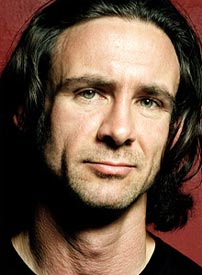


Mother Nature: "Foot Work"
Mother Nature is portrayed as the earthy, hippie-like character. She used to do massages and hardly earned any money for it. Then, she ran into another friend she went to school with for massage therapy, and this woman was making a lot of money. Apparently, there is an underground sexual foot massage business that the friend hooks up Mother Nature into. They make tons of money pleasuring men this way. The story ends when they want to get out of the business but are refused, her friend murders their boss and then the friend is murdered, so Mother Nature runs away to this retreat to save her life from the Russian Mafia who run the foot business.

Miss America: "Green Room"
Not as interesting of a story. She is a pregnant model who wants to become famous by promoting an exercise devise on television. The fate of Miss America and her baby are not very good by the end of the novel...

Lady Baglady: "Slumming"
My favorite story. Lady Baglady is a rich woman who is bored with her high-class lifestyle. She soon finds another rich friend of hers who is slumming like a homeless person on the street in rags. Her friend convinces her that homeless is the new rich, so she tries being homeless and learns how thrilling it is. It becomes a hobby of hers. She reconnects with her husband. But, their fun soon ends when Lady Baglady and her husband are sleeping in an alley when the witness a murder. The murderer tries to kill every homeless person in the city to eliminate the witness, so Lady Baglady is forced to stop slumming.

The Earl of Slander: "Swan Song"
A reporter wants to make it big, so he meets up with a former child star and realizes that he can't sell a good story on a perfect life. So, he frames him for child pornography and other forms of addiction in order to create an article that will win him a Pulitzer and cause his career to take off. The child star kills himself from the horrible exposure and publicity even though none of it is true.

The Duke of Vandals: "Ambition"
He is an artist who wants to make it big. He sneaks his own and other artworks into museums to spark their popularity. He is then confronted with how to make it big: he must kill another artist. He does so and is granted fame, but he is now blackmailed. In order to keep allowing for his success to continue, his schemers keep giving him more artists to kill. They keep making him more famous and famous, but he doesn't like the continuing murder business.

Director Denial: "Exodus"
She is a social worker at a police station who tells the story of a former coworker, Cora Reynolds. (She names her cat after Cora) She works in a department where they work with sexually abused children, so they have dolls that children use to identify where they were taken advantage of. The problem is that the police officers abuse the dolls, staining them with their filth. Cora does everything she can to stop it. She puts pins in the holes and tries to take them home, but her desire to stop them and fail eventually kills her.

Reverend Godless: "Punch Drunk"
He is a former solider who needs to raise money to fund a war on religion. In order to do this, he dresses up in drag and allows people to assault him. He is an atheist and speaks avidly of it.

The Matchmaker: "Ritual"
A cowboy who convinces his wife to marry him after hiring a male prostitute to show him that he really is a man, especially when compared to this one. This story is really disturbing because it talks about a family word passed down from the generations. "Sharook." They tell of being in Nazi POW camps where the officers used to make women perform on the men. Once they climaxed, they would slit their throats which would make this noise. The noise basically means that life sucks and there's nothing you can do so live it up now. The uncles eventually escape when one woman takes revenge before her death and bites it off.


Sister Vigilante: "Civil Twilight"
She is a strange woman who carries around a bowling ball. People are discovered murdered in the town she lives in with heavy objects, similar to a bowling ball. The town bans certain colors of bowling balls so they are visible to see in the nighttime, and they track for a bowling ball killer. Wild.

Chef Assassin: "Product Placement"
This story is written in the form of a letter to the manufacturers of the knife company which he uses. The Chef is a professional chef who is angered by negative reviews of critics. So, when he gets a negative review, he kills the reviewer with his favorite knives. He writes to the company to blackmail them that if they tell on him, he will expose that he used their knives to do the deeds which would wipe out their company. He wants to thank them for such an incredible product and inspiration.

Comrade Snarkey: "Speaking Bitterness"
Crazy story too. This lady goes to a women's support group because he can't trust men anymore since her mother always warned her of her father sexually abusing her, which never happened. When they are at the support group, a transvestite walks in and they try to get him out of there. He tries to plead that he is now a woman. In order to prove this, they interrogate him and then sexually assault him to figure out what he is or is not.

Agent Tattletale: "Crippled"
A man becomes temporarily crippled and tries to get rich from worker's compensation from his job. Because he will be found out soon, he kills the man who is investigating on him. He then takes his job and is almost killed by a woman he was spying on earlier.

The Missing Link: "Dissertation"
The Missing Link writes an intense paper on how certain creatures really do exist, like Big Foot, sasquatches, the Loch Ness Monster, eetc. The Missing Link, apparently, comes from a generation of people who can tranform into sasquatches. Hm.

The Countess Foresight: "Something's Got to Give"
This woman receives psychic visions by touching a jar filled with Marilyn Monroe's unborn child. When the woman at the store will not let her touch it anymore, she murders her. She then has to wear a big bracelet on her wrist as a part of her parole.

The Baroness Frostbite: "Hot Potting"
The Baroness worked at a lodge. She lost her lips to frostbite when she tried to save a swimmer in the frozen lake. She discusses people's features and missing them and the culture's obsession with appearances.

Miss Sneezy: "Evil Spirits"
Miss Sneezy has chronic sinus problems. She claims to have some wacky, incurable disease that she and others had and were locked up in some ward for a while. No one really knows if this is true or not. She claims to have been locked down in a government isolation facility and has now escaped.

Crazy stories, huh? Some of them were shocking while others were pretty interesting. I am impressed with the names that Palahniuk came up with. It seems like he had fun creating them, but they match the stories perfectly. I really liked having a book with all of these nicknames instead of the normal names, Jim, Bob, Rachel, etc. He continues to surprise me and be unqiue.

I wonder how he created this story. Did he come up with the stories first and then the plot or the other way around? How did he structure which story came first, next, or last? Who did he want to kill off and why? So many questions!

Lastly, I did want to add the background behind his most popular story from this book, "Guts." I read that this was also published in Playboy, and it received an intense following. While touring for his books, Palahniuk would read this story, and people would literally faint while hearing him read it. The total racked up to 65 people while on tour. The only place he didn't have someone faint was in New York City. Pretty interesting, but I'm not surprised. It's really graphic and disturbing. Read at your own discretion.

You have to be really prepared if you want to read this book. It's a bit messed up, but other parts of it are enjoyable. If you want to learn how to portray characters of create a strong character, this book is a good look into studying how to do that since he does it so well. I only advise to read this book with precaution!

What do you think of Haunted?

Wednesday, July 29, 2009

Nick and Norah's Infinite Playlist


Over the weekend, I watched Nick and Norah's Infinite Playlist, a movie I have been wanting to see since I saw its initial trailer. A friend of mine recommended that I read the book before the movie, which is true in all cases of book-turned-movie, but I couldn't find the book anywhere and I guess I got lazy.

I was hooked on the movie because it looked a lot like Juno, an independent film about teenagers and music. And, it has Michael Cera starring in it and another no-name female lead. What I discovered: this film is no Juno. Juno is a MUCH better movie than this one. I will remember Juno, but I will long forget Nick and Norah.

Problems for me existed within the plot. The whole plot was a little far-fetched, and the portrayal of teenage love was mediocre. They did a great job with encapsulating how someone can't get over someone else and how hard moving on is. I just think it's unrealistic to paint the picture for teenagers that one can find true love, and establish a solid relationship where they are already "active" in just one night. I was surprised how quick they "got moving" once they were alone. Great message.

I thought it was unbelievable how many open parking spots there were in New York City, where the movie was filmed, on a Friday night. Now, I'm no NYC native, but I would think that parking would be a bit difficult, as would driving. But no, these inexperienced drivers found a parking spot in front of every bar and club they wanted, pulled U-turns in the streets, and moved quickly from one block to the next. Unrealistic.

The premise was kind of cool though: They were moving through NYC to find their favorite band who was playing a surprise show. They kept getting clues all along the way to find where they would play. But here's the thing that bothered me--once they found Fluffy, the band they were looking for, Nick and Norah just take off to go home. What else did they search for? What other teenagers, or anyone for that matter, would spend HOURS looking for a free show of their favorite band, find it, and then just leave??? Who cares if it's three or four in the morning? It's your favorite band AND it's free! That doesn't make sense to me.


It's also quite weird how Nick's love interest had moved on from him to another guy but then she just kept stalking him and trying to get back together with him. Honestly, in real life, I think the girl would just move on. She was like super-stalker. It's hard for me to take these movies seriously when the characters are not authentic and the plot is just too far-fetched.

Perhaps the two things I liked in the movie was the focus on music and the portrayal of the drunk girl--she did an excellent job being that drunk girl. Hilarious. The mix tapes and the focus on music was really cool. They have a pretty good soundtrack to accompany this movie, and music played during the movie was also really good. Very indie. Very good.

It's movies like these that teenagers will watch and have unrealistic hopes! I used to watch movies like these when I was younger and I was filled with these lofty ideas about my future. It just doesn't happen this way. I guess it's good to get lost in a movie, but it was trying to be real and it wasn't. I wasn't even that entertained. I was more annoyed I guess.

I also enjoy movies that take place in the span of one day. I think those scripts are really clever. And I also don't understand the inclusion of Nick's gay friends. I didn't know how necessary that was--it just kind of seemed thrown in there for no apparent reason--and I didn't even buy them as gay characters. I know there's no stereotypical role, but the acting didn't even convince me. It was another odd hindrance to the film. And trust me, I have no problems with gay people or including them in films... It just seemed random for all the commenting they did on it during the movie.

The cameo by Andy Samberg might have been my favorite moment. Then it went downhill.

Is the book better and/or different? I might have higher hopes for the piece of fiction rather than this film.

What do you think of Nick and Norah's Infinite Playlist?